

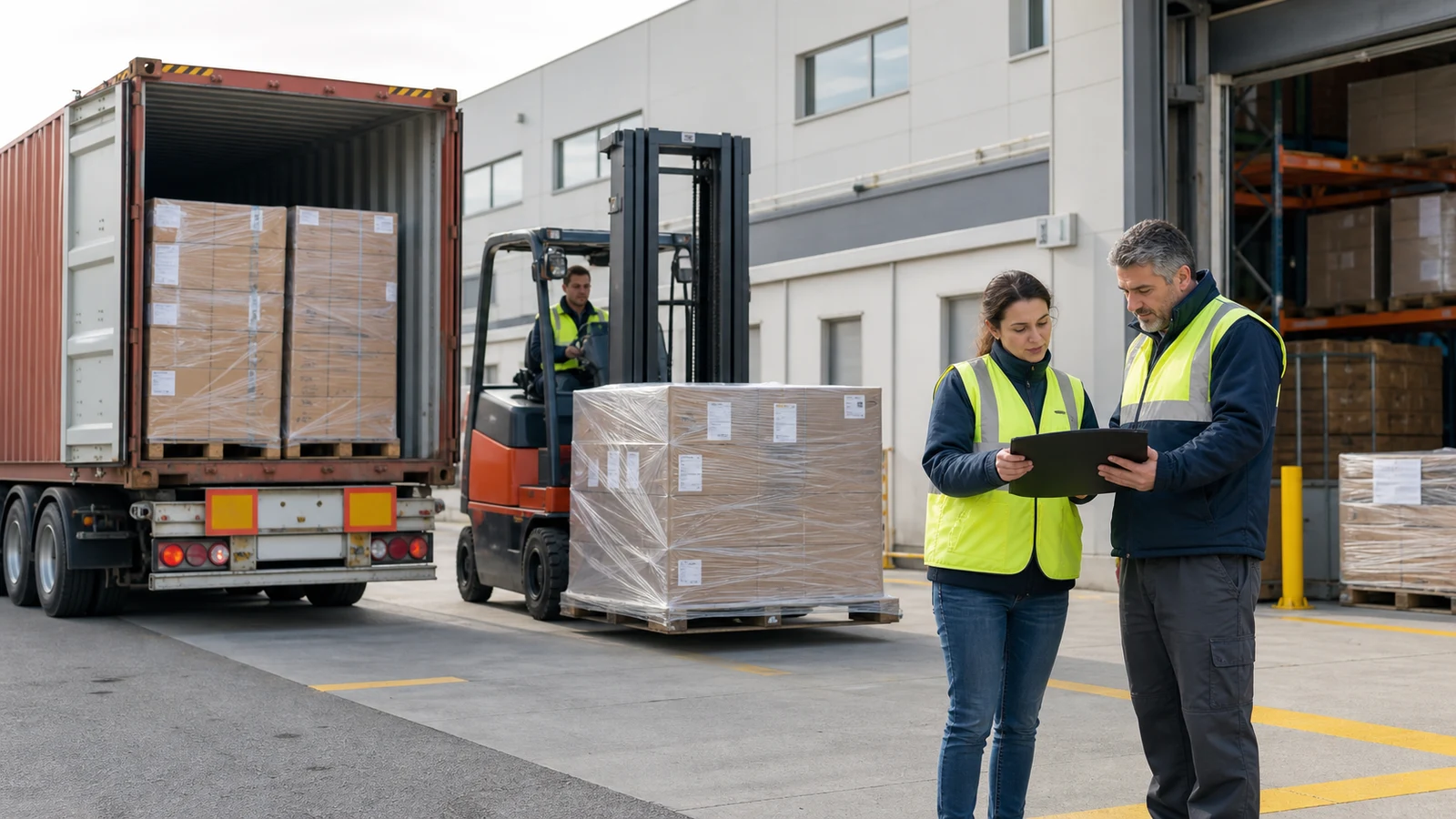
Primary-source baseline captured on 16 July 2026. Carrier acceptance, customs treatment, rates and schedules can change by shipment; recheck the linked authority and the accepting provider before cargo release.
Shipping from China to France in 2026 requires a named importer, a valid EU EORI path, product and TARIC checks, complete advance security data for ICS2, a customs declaration and a defined French delivery event. Freeze the packed cargo, China origin point, EU first-entry location, French clearance plan, final postcode and unloading condition before comparing express, air, rail, LCL or FCL offers. French operators also need to verify the 2026 transition from EORI-SIRET toward EORI-SIREN. A forwarder can coordinate carriage and filings, but it cannot assume the importer’s customs, tax or product-compliance responsibility.
France route release matrix for 2026
The matrix separates transport selection from EU entry, French customs and product-market controls. Release only after the responsible party can support every applicable row.
Information-gain asset: Map shipping from China to France from supplier-ready date to final handoff, separating mode, cost factors, customs, destination charges, controllable delays, and shipment-specific assumptions.
| Shipment condition | Likely starting path | Control owner | Release evidence |
|---|---|---|---|
| Small accepted cartons | Express or air | French importer and carrier | Commodity acceptance, importer identifier, advance data and clearance scope |
| Urgent commercial pallets | Air freight | Importer, broker and forwarder | Final package data, EORI, classification and airport-to-door handoffs |
| Stable part load | Rail or LCL after route review | Importer and forwarder | First-entry, transit, deconsolidation, customs and final-delivery plan |
| Container-scale cargo | FCL ocean or rail container | Importer, packer and forwarder | Loading, seal, ENS, customs, free-time and unloading controls |
| Regulated or conformity-sensitive product | Mode only after product review | Importer and product compliance owner | TARIC measures, conformity evidence, licence or other authority acceptance |
Define China, EU entry and France as separate route events
A China-to-France quote needs more precision than two country names. State where custody begins, where the goods first enter the EU customs territory, where they are declared and where delivery is complete.
Record the supplier pickup address, export gateway, carrier cutoff, first EU arrival point, temporary-storage or transit handoff, French customs office or broker path, final postcode and delivery condition. Ocean cargo may first enter through France or another member state; rail and road combinations may use transit before French release. The customs and VAT consequence depends on the actual procedure, not the marketing label for the route.
Freeze package count, outside dimensions, gross and net weight, commodity and material description, battery or dangerous-goods status, commercial value, origin and cargo-ready event. Keep pickup, export acceptance, departure, arrival, availability, customs release and final receipt as distinct timestamps. A single promised transit duration hides the stage where delay ownership actually sits.
| Route event | Required evidence | Owner |
|---|---|---|
| Supplier release | Final cargo sheet, documents and signed count | China supplier |
| China export | Declaration and carrier acceptance record | Exporter and forwarder |
| EU first entry | Valid ENS or permitted combined filing reference | Carrier and filing party |
| French release | Customs decision and tax or guarantee record | Importer and representative |
| Final delivery | Appointment, condition, unloading and receipt | Consignee and delivery provider |
Lock the importer, EORI and representation model
EU customs operations require an EORI identity, while French Customs is changing how French-established operators use EORI identifiers during 2026. Treat identifier readiness as a pre-booking check, not a field to discover after arrival.
Name the legal importer and verify its EORI in the EU system. French Customs states that French operators are moving toward the EORI-SIREN model and that EORI-SIRET identifiers will be deactivated during the second half of 2026 on a date to be announced. The importer should confirm which identifier its customs applications and authorizations require at the shipment date instead of copying an older number from a prior entry.
Agree whether the customs representative acts directly or indirectly and document the authority. Keep importer, declarant, consignee and delivery party as separate roles where they differ. Incoterms allocate commercial tasks, costs and risk but do not automatically create an EORI, appoint a representative or prove who can lawfully lodge the declaration.
- Legal importer name, establishment and valid EORI.
- 2026 EORI-SIREN transition check for French-established operators.
- Direct or indirect representation and written authority.
- Importer VAT and payment or guarantee arrangement where applicable.
- Broker escalation contact for classification, value and document queries.
Build one ICS2 and customs data version
ICS2 requires advance safety and security data before or around EU entry according to the transport process. The carrier’s filing does not excuse vague or inconsistent product data from the commercial parties.
As of 1 June 2026, consignments entering the EU by air, sea, rail or road should be covered by valid Entry Summary Declaration data through ICS2 or an allowed combined filing path. Identify the party filing each data set, its deadline and the reference returned. Provide specific goods descriptions, parties, routing, transport and package information early enough for the filing party to validate rather than guess.
Reconcile the ENS data with the commercial invoice, packing list, transport instruction and customs declaration. A model-number change, split shipment, new package count or changed consignee after filing can require an update. Keep the final version index and filing acknowledgement in the shipment file so a customs or carrier query reaches the party that owns the underlying fact.
| Data group | Source record | Reconciliation test |
|---|---|---|
| Parties and identifiers | Contract, EORI and broker authority | Importer, consignee and declarant roles are not conflated |
| Goods description | Specification and invoice | Plain-language material, function and model identify the cargo |
| Packages and weight | Final packing list | Counts and gross weight match carrier acceptance |
| Routing and transport | Booking and transport instruction | First entry and onward handoffs match the filed path |
Resolve tariff, origin and product controls before departure
French release applies the Union Customs Code, EU tariff measures and relevant product rules. A low duty rate does not mean a product is automatically admissible or market-ready.
Use Access2Markets and TARIC with the proposed classification, origin and import date to identify duty, trade-defense, certificate, licence or other measures. Support customs value with the transaction and applicable adjustments. Keep non-preferential origin separate from any preferential claim; a generic certificate of origin does not prove entitlement under a rule that does not apply to the China-origin goods.
Check product-specific EU and French controls before loading. Machinery, electrical goods, chemicals, food, cosmetics and other regulated categories can require conformity, labeling, registration, authorization or competent-authority evidence independent of customs documents. The forwarder should receive the operational status, but the importer or product-responsible party owns the legal determination.
- Proposed CN or TARIC classification and product specification.
- Customs value method, currency and adjustment support.
- Non-preferential origin and any valid preference analysis.
- Applicable product restrictions, conformity and market-access evidence.
- Importer decision on duty, VAT and customs-debt payment.
Compare transport modes on a landed handoff scope
Compare express, air, rail, LCL and FCL using the same packed cargo and the same delivery endpoint. Mode names alone do not reveal who pays or controls terminal, customs and final-mile events.
For each option, separate China pickup and export handling, main carriage, fuel or security adjustments, EU terminal or CFS charges, customs representation, duty and VAT funding, inspections, storage, delivery appointment and unloading. Label confirmed, estimated, pass-through and excluded amounts. Ask whether the quoted route clears in France or uses transit from another EU entry point.
Assess schedule as a chain of ranges: supplier readiness, booking availability, cutoff, departure, main movement, arrival availability, customs release and final delivery. For rail or multimodal paths, identify border and terminal handoffs. For ocean cargo, name demurrage, detention and port-storage clocks. For air, verify chargeable weight and airport-to-door scope.
| Mode | Useful condition | Scope check |
|---|---|---|
| Express | Few accepted cartons need a simple door handoff | Commodity, remote area, brokerage and tax disbursement |
| Air freight | Urgent commercial cargo supports airport handling | Chargeable weight, terminals, customs and final trucking |
| Rail or multimodal | Schedule and cargo fit a controlled inland path | Border transfers, EU first entry, transit and terminal release |
| LCL ocean | Part load can tolerate consolidation | Origin and destination CFS, minimums and deconsolidation |
| FCL ocean | Volume or control supports a dedicated unit | Port, free time, container delivery and unloading |
Engineer the French final-delivery event
Door delivery is not a complete instruction. French urban access, appointment, vehicle, tail-lift, dock, lifting and receiver constraints should be fixed before the main movement departs.
Confirm the delivery postcode, business hours, appointment lead time, access restrictions, maximum vehicle, dock height, tail-lift or crane need, pallet exchange expectation and who unloads. State whether the carrier completes curbside, dock, room-of-choice or another named event. For machinery or oversized cargo, verify route, permits and lifting responsibility separately.
Give the consignee the package count, dimensions, gross weights and exception contact before arrival. Require proof of delivery that records visible condition and discrepancies, not only a signature. If customs, product control or inspection delays release, the importer should have written authority limits for storage, examination, treatment, return or other contingent costs.
- Final postcode and named delivery completion event.
- Appointment and receiving contact.
- Vehicle access, dock, tail-lift and unloading equipment.
- Package-level condition and discrepancy record.
- Authority for storage, inspection and exceptional delivery costs.
Worked control example: industrial components to Lyon
A French manufacturer buys six pallets of industrial components from Suzhou. One quote offers ocean delivery to France, but it does not identify the EU first-entry port, EORI version, customs representation or unloading condition.
- The buyer confirms its active EORI identifier for the planned 2026 declaration and gives the appointed representative written product, value and origin data.
- The supplier freezes final pallet dimensions, package marks and descriptions; the carrier filing party reconciles them into the ICS2 data set before the applicable deadline.
- The forwarder requotes the route with the named first-entry port, transit or French clearance procedure, destination charges, customs handoff and Lyon delivery appointment.
- The receiver confirms dock access and records all six pallet IDs and visible condition at delivery against the approved shipment version.
The buyer compares a true customs-cleared delivery scope rather than a port-to-port price, while the 2026 EORI transition and ICS2 filing are resolved before departure.
Failure controls before cargo release
Use this table as a stop-release check. A responsible owner should resolve each trigger against the same cargo and document version before the shipment moves to the next handoff.
| Failure trigger | Operational consequence | Required control |
|---|---|---|
| An old EORI-SIRET is copied from a previous French entry | The identifier may not match the 2026 customs application or transition status | Verify the active EORI and French transition notice for the shipment date |
| ICS2 data is left entirely to the carrier | Vague or inconsistent goods and party data can cause filing queries or rejection | Name the filer and reconcile advance data to the final commercial file |
| A route says France but first enters through another member state | Transit, customs, VAT and handoff assumptions remain unclear | Document first entry, customs procedure and French onward movement |
| Product conformity is treated as a freight-forwarder task | Transport may arrive while market-access evidence is missing | Assign product-control decisions to the importer or qualified responsible party |
| Door delivery omits appointment and unloading | The final vehicle may be unable to complete delivery | Freeze access, equipment, receiver and completion event before booking |
Quote-ready data handoff
Send the inputs together and label estimates. This gives the forwarder, carrier, broker and consignee one controlled starting version instead of a price request assembled from conflicting messages.
- China pickup address and supplier-ready event
- Final packed package count, dimensions and gross weight
- Specific commodity, material, function and model descriptions
- Battery, dangerous-goods or product-control status
- French importer, active EORI and customs representative
- Proposed classification, origin, value, currency and Incoterm
- EU first-entry point and French clearance or transit plan
- ICS2 filing party, deadline and required data status
- Final French postcode, appointment and unloading condition
- Required delivery event and exception-cost authority
Primary sources and verification boundary
These sources support the document, customs or dangerous-goods distinctions used in this guide. They do not replace a product-specific ruling, licensed customs advice or carrier acceptance for the actual shipment.
- European Commission – Importation procedures: EU entry, temporary storage, customs declaration, duty, VAT and release-for-free-circulation boundaries for non-EU goods.
- European Commission – Economic Operators Registration and Identification number: An EORI number identifies economic operators and is mandatory for customs operations such as import, export and transit in the EU customs territory.
- European Commission – Import Control System 2: As of 1 June 2026, consignments entering the EU by any transport mode require valid Entry Summary Declaration data through ICS2 or an allowed combined filing path.
- French Customs – EORI registration and 2026 identifier transition: France requires EORI registration before customs operations and is transitioning French operators toward the EORI-SIREN identifier during 2026.
- French Customs – Restricted or prohibited goods: Product-specific EU and French safety, conformity, licence and documentary controls can apply independently of transport booking.
- European Commission – Access2Markets: EU tariffs, procedures, formalities and product requirements by product and origin.
- International Chamber of Commerce – Incoterms rules: Incoterms allocate delivery tasks, costs and risks; they do not replace a written freight scope.
Related Sendwin resources and next actions
Use the links below to move from the reference answer into a live shipment decision. Each anchor identifies the destination topic so the relationship remains useful to buyers and search systems.
Compare France with other destination controls in the shipping routes from China hub.
Structure the declaration and importer evidence through the customs clearance guide.
Reconcile invoice, packing and transport data in the shipping documents hub.
Separate main freight and destination exposure with the shipping cost control guide.
Build event-level ranges using the shipping time planning guide.
Review port and container handoffs through ocean freight from China.
Send one France-ready cargo version through the shipment quotation request.
Continue the route and handoff workflow with the PCB shipping from China.
Frequently asked questions
The short answers below preserve the responsibility boundary. Confirm the actual cargo, date, lane, importer and accepting provider before relying on a general answer for release.
Does a French importer need an EORI in 2026?
EU customs operations require an EORI identity. French-established operators should also verify the French Customs transition toward EORI-SIREN and confirm which active identifier applies on the shipment date.
Who files ICS2 data for freight from China to France?
The filing arrangement depends on the transport contract and allowed filing model. Name the carrier or other filing party, its data deadline and each commercial party that supplies the underlying goods and party facts.
Can goods clear in another EU country before delivery to France?
A route can first enter or move under customs control through another member state, but the importer must document the actual entry, transit, declaration, VAT and onward-delivery procedure rather than assume it is equivalent to French clearance.
How long does shipping from China to France take?
There is no reliable universal duration. Build ranges for supplier readiness, booking, departure, main movement, arrival availability, customs or product controls and final delivery using the actual mode and route.
Ready to test the plan against final cargo data? Request a shipment-specific freight quotation.