

Heavy Machinery Shipping From China: Packaging, Documents, Mode, and Risk Checklist
Primary-source baseline captured on 16 July 2026. Carrier acceptance, customs treatment, rates and schedules can change by shipment; recheck the linked authority and the accepting provider before cargo release.
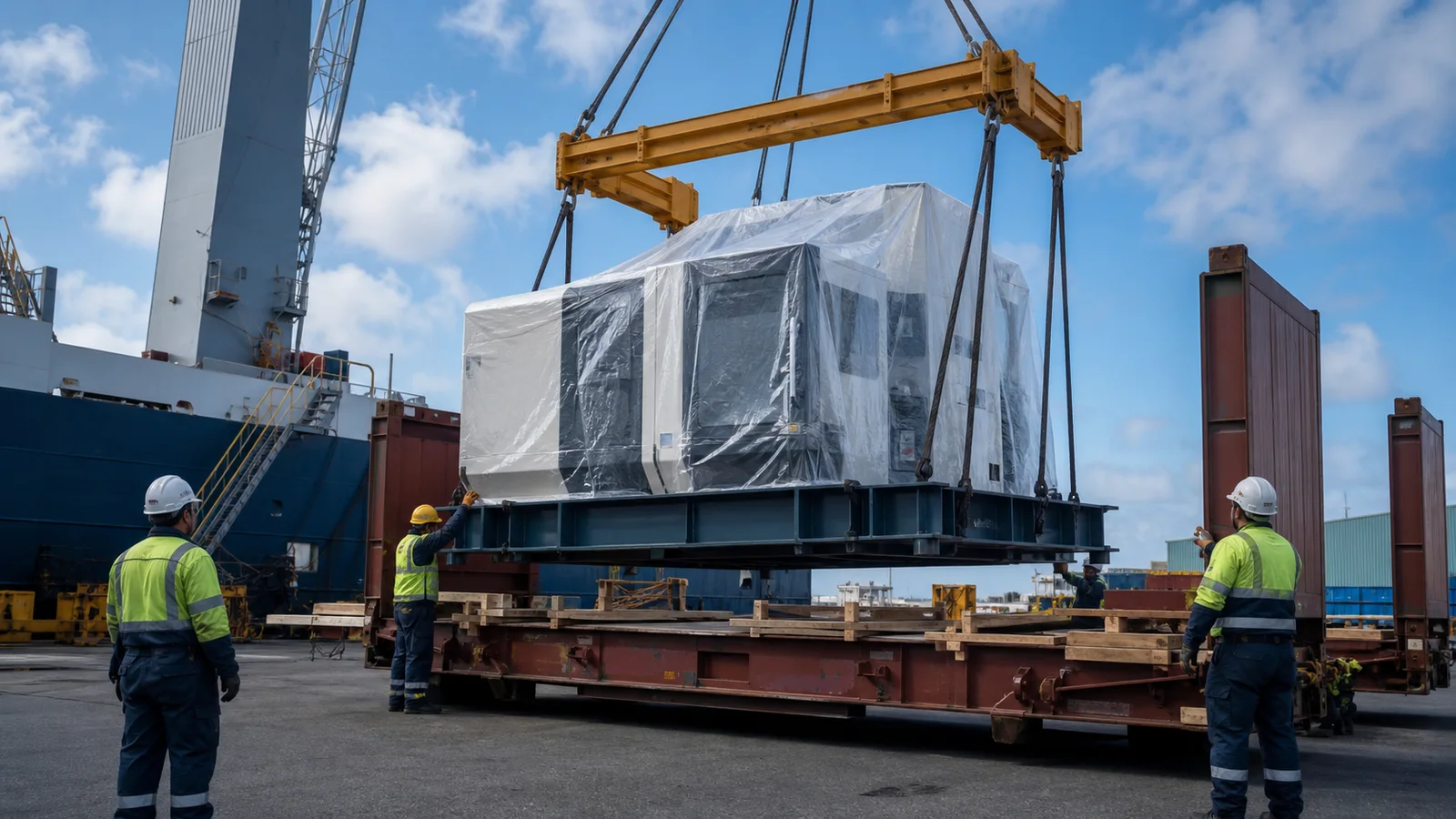
Heavy machinery shipping from China should begin with the final packed unit, not the catalog machine. Record verified dimensions, gross weight, center of gravity, bearing points, lifting points, preservation needs, fluids, batteries, serial number and dismantled parts before selecting a container, flat rack, open top, roll-on/roll-off or breakbulk plan. The shipment is not ready when a mode appears to fit; it is ready when the assigned equipment, floor and point loads, lift plan, blocking and bracing, weather protection, import admissibility and handoff evidence have named owners.
Heavy machinery mode rejection matrix
Use this matrix to reject unsuitable modes early. Dimensions are only one gate; concentration of load, handling access, securing and destination capability can invalidate a nominal fit.
Information-gain asset: Turn heavy machinery shipping from China into a shipment-readiness matrix covering acceptance-sensitive contents, packing evidence, documents, mode rejection rules, and exception ownership.
| Mode candidate | Use only when | Reject when | Required evidence |
|---|---|---|---|
| Standard dry container | Packed unit clears the assigned door, interior, payload and floor limits | Lift access, point load or securing cannot be proven | Equipment specification and load-distribution drawing |
| Open top | Over-height loading is accepted and weather protection is engineered | Over-width or crane/lashing plan is unresolved | Lift plan, tarp and securing design |
| Flat rack | Out-of-gauge dimensions and concentrated loads are accepted | Terminal handling or lashing points are unconfirmed | Carrier OOG approval and engineered securing |
| Ro-ro | Self-propelled or towable unit meets operator acceptance | Leaks, unsafe brakes or unsupported dimensions remain | Condition report and operator acceptance |
| Breakbulk or project cargo | Lift, stow and discharge are engineered for the unit | Port crane, berth or inland handoff is unknown | Method statement and port capability confirmation |
Freeze the final packed machinery data set
A factory drawing describes the machine, while the carrier handles a packed transport unit with skids, cases, removed assemblies and preservation materials. Build the transport record after packing design is known.
Measure length, width and height at the widest and highest transport points, including skids, projections and covers. Weigh the complete unit or document the approved method and uncertainty. Mark the center of gravity on the package and drawing, identify bearing footprints and calculate load distribution. Record safe lifting points, sling angles, spreader requirements and prohibited contact zones. A gross weight placed at one small base can exceed a floor or handling limit even when total payload is acceptable.
Create a controlled component list for anything removed: guards, electrical cabinets, tooling, counterweights, fluids, batteries and loose accessories. Link each item to a package and reassembly reference. Photograph serial plates, final dimensions, weight markings, center-of-gravity marks, lifting symbols, barrier wrap, desiccant or corrosion protection and closed package condition. Supplier estimates remain labelled until verified.
- Final packed dimensions and gross weight
- Center of gravity and bearing footprint
- Rated lifting and tie-down points
- Removed-component packing list
- Preservation and storage limits
Engineer lifting, support and securing as one system
The lifting plan gets the cargo into the transport unit; support and securing keep it within acceptable movement and load paths throughout road, terminal and sea handling.
Use a competent rigging plan that identifies crane or forklift capacity, accessories, rated working loads, sling geometry, spreaders, trial lift and exclusion zones. OSHA’s material-handling rule illustrates the need for inspected and identified rigging equipment within its scope; local workplace rules also apply. Custom lifting accessories require their own rated and tested evidence. Do not use machine covers, pipework or unverified eyebolts as lifting points.
Design skids, chocks, blocking, bracing and lashings from the actual mass, center of gravity, transport accelerations and available securing points. The CTU Code warns that heavy cargo may require platforms or flat racks when general-purpose container securing capacity or forklift point loads are unsuitable. Do not brace indiscriminately against container panels. Show how forces reach structural members, and obtain carrier or engineer approval when required.
| Control | Design input | Release evidence | Stop condition |
|---|---|---|---|
| Lift | Mass, COG, points and sling geometry | Approved lift plan and gear IDs | Unrated point or accessory |
| Base support | Bearing footprint and floor capacity | Load-spreader drawing | Unknown concentrated load |
| Blocking | Fore-aft and transverse forces | Material and installation record | Bracing bears on weak panel |
| Lashing | Angles, capacity and anchor points | Calculation and final photographs | Unverified anchor strength |
Match preservation and packaging to the route environment
Machinery damage often develops without a dramatic impact: moisture, salt, condensation, abrasion, unsupported shafts and long storage can degrade precision surfaces and electrical systems.
Define the preservation period from factory packing through possible port storage and destination commissioning. Protect machined surfaces, lock moving axes, support shafts, isolate sensitive instruments and prevent loose parts from striking the machine. Choose barrier film, vapor corrosion inhibitor, desiccant, humidity indicator, drainage or ventilation based on the equipment and route. A tarpaulin over an open-top or flat-rack load is weather shielding, not a substitute for a sealed preservation system.
If wood packaging or dunnage is used on an international route, verify whether ISPM 15 treatment and marks apply. Keep untreated solid wood out of the final pack when the destination requires compliant material. Specify package opening and lifting instructions for the consignee and prevent cargo from falling or shifting when restraints are removed. Retain packing material certificates and inspection photographs with the shipment file.
- Preservation duration and environment
- Corrosion and condensation control
- Moving-part restraint
- Compliant wood packaging evidence
- Destination unpacking method
Resolve machinery documents and import controls before pickup
The freight booking proves transport acceptance, not legal admissibility. Machinery age, use, power source, fluids, batteries and destination rules can trigger separate controls.
Prepare a commercial invoice with specific machine description, model, serial number, condition, value, origin and transaction parties. Reconcile it to a packing list that identifies every main unit and removed component. Support classification with function and technical data. Confirm whether the destination controls used equipment, emissions, safety conformity, radiation sources, refrigerants, pressure systems, timber or other features. Obtain permits or conformity evidence before the carrier cutoff when required.
Drain or declare fuels, oils and other substances according to the machine state and mode rules. Identify installed and spare batteries by chemistry and configuration; a battery-powered machine can invoke dangerous-goods acceptance even when the machine itself is not described as a battery shipment. Keep safety data, battery test evidence and carrier approval linked to the exact configuration. Never describe a powered machine as general cargo to bypass acceptance.
| Document | Must reconcile | Owner | Failure risk |
|---|---|---|---|
| Commercial invoice | Model, serial, condition, value and origin | Seller and buyer | Customs query or valuation delay |
| Packing list | Units, accessories, packages and weights | Packer | Shortage and handling error |
| Technical file | Function, power and controlled features | Manufacturer and importer | Permit or conformity hold |
| Transport declaration | Fluids, batteries and dangerous goods | Shipper | Carrier rejection or enforcement |
Plan origin, port and destination handoffs before booking
A technically sound package can still fail when the next facility lacks the crane, trailer, route clearance, storage surface or team needed to receive it.
Map factory extraction, loading position, origin truck, terminal receiving, vessel loading, discharge, customs examination, destination trailer and final offload. Record crane reach, forklift capacity, trailer deck height, bridge and road restrictions, appointment windows and ground-bearing requirements. Confirm whether inspection can occur without destroying preservation and who will restore the package afterward.
Use milestone evidence rather than vague status: final survey accepted, lift completed, securing signed off, terminal receipt issued, carrier OOG approval active, loaded movement confirmed, customs released, delivery route cleared and final receipt signed. Set an exception owner for weather damage, lashing rejection, weight variance, customs examination or unavailable discharge equipment.
- Factory extraction and origin loading
- Road and terminal capability
- Carrier acceptance and stow plan
- Examination and repacking plan
- Destination offload and installation boundary
Worked shipment example: a 7.2-ton CNC press
A supplier proposes a standard container because the bare machine dimensions fit. The packed skid adds width, the center of gravity is offset and the receiving factory has no unloading dock.
- The engineer records the final skid dimensions, measured gross weight, offset center of gravity, bearing footprint and rated lift points after removable guards are packed separately.
- The team rejects the dry-container assumption because forklift entry and concentrated floor loading are not proven, then obtains a flat-rack option with carrier OOG approval.
- A rigging contractor issues the lift plan; the packer builds load spreaders, corrosion protection and engineered blocking and lashing, then photographs each release point.
- The importer confirms used-equipment controls and arranges a destination crane and low-bed route before the origin pickup.
The selected mode follows the final load and handling evidence. The project does not depend on nominal container dimensions or a last-minute destination crane search.
Failure controls before cargo release
Use this table as a stop-release check. A responsible owner should resolve each trigger against the same cargo and document version before the shipment moves to the next handoff.
| Failure trigger | Operational consequence | Required control |
|---|---|---|
| Mode is chosen from bare machine dimensions | The final skid or cover does not fit or load safely | Approve only verified final packed data |
| Total payload is checked but point load is ignored | Container floor or handling equipment can be overstressed | Document bearing area and load distribution |
| Lifting points are assumed from appearance | The machine or rigging can fail during handling | Use rated points and an approved lift plan |
| Preservation ends at factory pickup | Moisture and storage exposure damage precision systems | Set a route-length preservation specification |
| Destination offload is arranged after sailing | Cargo incurs storage or unsafe improvised handling | Verify route, crane and receiving site before booking |
Quote-ready data handoff
Send the inputs together and label estimates. This gives the forwarder, carrier, broker and consignee one controlled starting version instead of a price request assembled from conflicting messages.
- Final packed dimensions for every unit
- Verified gross weight and weighing method
- Center of gravity and bearing footprint
- Rated lift and securing points
- Packing, preservation and storage limits
- Machine model, serial, function and condition
- Fluids, batteries and controlled components
- Origin extraction and loading equipment
- Preferred and rejected transport modes
- Destination customs, route and offload capability
Primary sources and verification boundary
These sources support the document, customs or dangerous-goods distinctions used in this guide. They do not replace a product-specific ruling, licensed customs advice or carrier acceptance for the actual shipment.
- UNECE – IMO/ILO/UNECE CTU Code: The CTU Code provides a global non-mandatory practice for packing, load distribution, blocking, bracing and securing cargo in transport units.
- U.S. Occupational Safety and Health Administration – Rigging equipment for material handling: Rigging equipment within the standard’s scope must be inspected, carry legible working-load identification and stay within rated capacity; custom lifting accessories require marked safe working loads and proof testing.
- International Maritime Organization – Cargo securing and packing: Proper stowage, load distribution and securing are safety controls; inadequate securing, overloading and cargo misdeclaration create risks during loading, carriage and discharge.
- International Plant Protection Convention – ISPM 15: Wood packaging and dunnage phytosanitary requirements for international trade.
- International Maritime Organization – Verified gross mass: IMO states that the SOLAS verified-gross-mass requirements entered into force on 1 July 2016. It describes two verification methods: weighing the packed container, or weighing all packages, cargo, pallets, dunnage and securing material and adding the container tare mass through the approved certified process. Verified gross mass is a condition for loading a packed container, not an entitlement to loading.
Related Sendwin resources and next actions
Use the links below to move from the reference answer into a live shipment decision. Each anchor identifies the destination topic so the relationship remains useful to buyers and search systems.
Map the international lane through the shipping routes hub.
Compare container and project-cargo assumptions with the ocean freight FCL and LCL guide.
Test final dimensions in the container loading calculator.
Check representative container limits through the 20ft shipping container dimensions reference.
Prepare transport and customs records with the shipping documents hub.
Send the final engineering and route file in a heavy machinery freight quotation request.
Continue the route and handoff workflow with the shipping from China to Brazil.
Frequently asked questions
The short answers below preserve the responsibility boundary. Confirm the actual cargo, date, lane, importer and accepting provider before relying on a general answer for release.
What is the best mode for heavy machinery shipping from China?
There is no universal best mode. Use the final packed dimensions, mass, point loads, lift access, securing design, route and destination capability to accept or reject dry container, open top, flat rack, ro-ro or breakbulk options.
Can heavy machinery go in a standard container?
Yes only when the assigned door, internal dimensions, payload, floor and point-load limits, loading method and securing plan are all acceptable. Nominal dimensional fit alone is insufficient.
Which machinery measurements are needed for a quote?
Provide final packed length, width, height, verified gross weight, center of gravity, bearing footprint, lifting and securing points, package count and handling restrictions.
Does machinery need special customs documents?
It needs specific commercial and technical evidence, and destination rules may add controls for used equipment, safety conformity, emissions, fluids, batteries, timber or regulated components. The importer should verify them before pickup.
Ready to test the plan against final cargo data? Request a shipment-specific freight quotation.
Share the Post: