

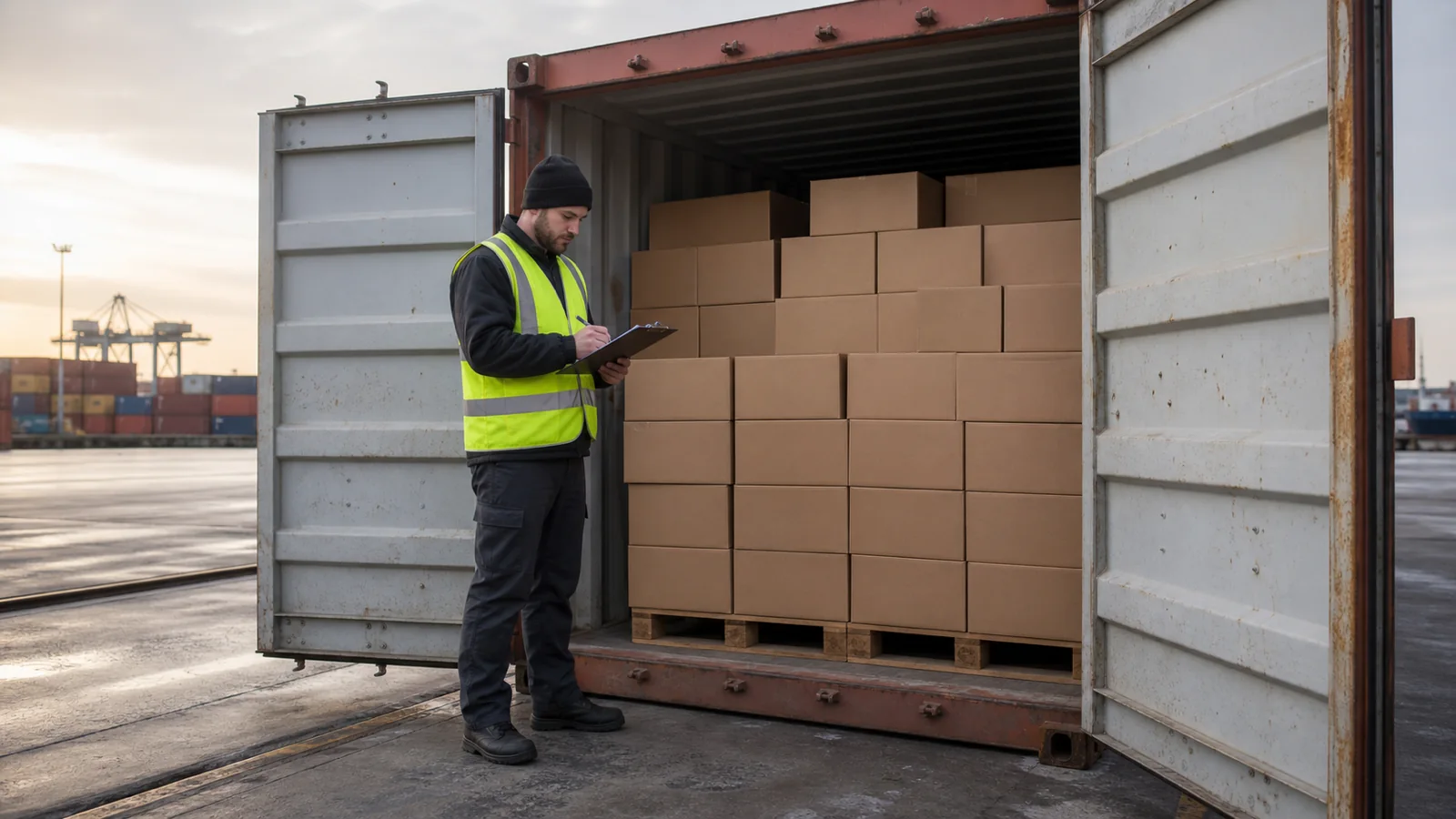
“Stuck in customs” is three different problems wearing one label
When a container sits and nobody can tell you why, the useful first move is to stop asking whether customs has cleared it and start asking which of three gates is still closed. Cargo arriving at a US port needs all three open before it moves: customs release, carrier release, terminal release. Different parties grant them, for unrelated reasons, and one being open tells you nothing about the other two.
Customs release means CBP has processed the entry and has no further interest in the shipment. Carrier release, often called freight release or line release, means the ocean carrier or its agent has been paid and has told the terminal it may hand over the box. An unpaid freight invoice, or an original bill of lading still sitting in a drawer in Shenzhen because nobody arranged a telex release, will hold cargo that CBP cleared days earlier. Terminal release means the terminal is satisfied: demurrage settled, an appointment on the books, a chassis available.
A large share of what importers call a customs clearance delay never involved CBP at all. So before you spend a week chasing the wrong party, work out which gate you are actually standing at.
Start from the status line, not from the theory
Whatever system you are watching, the wording it gives you narrows the problem faster than any general article about the customs clearance process. Match what you see to the row below, then ask the named party the named question.
| What you are seeing | What is most likely happening | Who can move it | What they need from you |
|---|---|---|---|
| Vessel arrived, tracking frozen, no entry number exists yet | Entry never got filed. Usually a missing document set or an unanswered email to the broker | Your customs broker | Commercial invoice, packing list, bill of lading, arrival notice, your importer number and bond details |
| Entry filed, broker says CBP has it “on hold” | A hold has been placed. Ask which kind, because the answer changes everything downstream | Broker reads the disposition in ACE; only CBP lifts it | Nothing yet. Get the hold type in writing first |
| Container moved off the terminal to an address you do not recognize | Intensive exam. The box has gone to a Centralized Examination Station to be unloaded | CBP, on its own schedule | Nothing to do but authorize the exam charges and watch the demurrage clock |
| CBP released it, carrier has not | Freight unpaid, or the original B/L was never surrendered or telex released | The carrier or the forwarder who issued the house B/L | Payment, and the supplier’s instruction to release. This one is often stuck in China, not the US |
| Everything released, still no pickup | Terminal side: appointment slots, chassis, or unpaid demurrage blocking the gate | Your drayage carrier | The last free day and whether a pre-pull is cheaper than waiting |
| A courier says “held in customs” and nothing changes for days | The courier’s own brokerage is waiting on you, and the email asking for it went to spam | You | A real goods description, invoice value, tax ID, and payment of the duty invoice |
The customs holds you will actually meet
“Under review” is not a category. There are a handful of distinct things CBP does, and they behave differently.
Document or data rejection
The entry was transmitted and bounced. Common causes are mundane: the value or the piece count on the entry does not agree with the manifest, the consignee name does not match the bond, or the description is too vague to sit under the declared classification. Nothing has been inspected. Someone simply has to correct and retransmit, which can happen the same day if your broker is looking at it. The fix lives in the commercial invoice and packing list that came out of China, which is why sloppy paperwork at origin costs you at the far end.
Non-intrusive examination
The container is X-rayed, usually without ever being opened. This is the mildest outcome and often clears with no action from you, because there is nothing for you to do. Ask your broker to confirm it is an NII or VACIS type exam rather than an intensive one; the two get described with the same word “exam” and have completely different consequences.
Intensive examination
The box is trucked to a Centralized Examination Station, stripped, sampled and repacked. The timeline is driven by that station’s queue, not by your urgency, and CBP does not publish a promise. What you can get is a real answer rather than a guess: ask your broker for the exam site name and the date the container was tendered there, then ask the CES for its current turnaround. CBP does not absorb the cost of moving and unloading your container for its own inspection, so the drayage, the devanning and the restow all come back to the importer, on top of demurrage that keeps accruing while the box is off the terminal.
Partner government agency hold
FDA, USDA/APHIS, FCC, EPA, CPSC and DOT each have their own data requirements riding along inside the customs entry. Food needs prior notice before arrival. Radio-capable electronics need the right FCC declaration. Solid wood pallets and crates need ISPM 15 heat treatment marks, and a bad pallet can get an otherwise perfect shipment ordered out of the country. These holds are released by the agency, not by CBP, and your broker may not be the party who can talk to them.
Paperwork that arrives after release
Release is not the end of the file. A CF-28 Request for Information asks you to substantiate value, classification or origin. A CF-29 Notice of Action tells you CBP is changing something, usually the classification and therefore the duty. A CF-4647 tells you the goods are not properly marked with country of origin and must be marked or redelivered. These have deadlines. Ignoring the first one is how importers turn a paperwork question into a penalty case, and the answers usually depend on the same HS code decisions that were made casually months earlier.
The holds that have nothing to do with CBP
Three recur constantly, and all three are invisible in the tracking systems importers watch.
The first is release of the bill of lading. If the shipment moved on an original B/L and the supplier has not been paid in full, no amount of customs clearance gets your cargo out. The document is the cargo. Sort out telex release or a seaway bill at booking, not on arrival day.
The second is the in-bond move. If your entry is filed at an inland port, the container clears the coast under an in-bond transportation entry and travels by rail before anything is examined. During that window the freight looks stationary and looks like a customs problem. It is a rail problem. Ask for the IT number and the destination port, and check the plan against realistic ocean transit times so you know how much of the calendar was always going to be the inland leg.
The third is the terminal. Appointments, chassis availability and gate congestion routinely add more standing time than a scan does, and none of it appears in any customs status.
Parcels behave differently from containers
When a courier shipment shows as held, the courier is usually also the broker, which means there is nobody independent to call. In practice the hold is one of four things. The goods description is too vague to classify, and “gift”, “sample” or “parts” is what triggers that. The value crosses the threshold where a formal entry is required instead of an informal one, so a document set that was never prepared is suddenly needed. A partner agency requirement applies that nobody thought about, which happens constantly with cosmetics, food contact items, batteries and anything that transmits a signal. Or duty and fees have been invoiced to you and the shipment simply waits until you pay.
Low-value import rules have been moving, and the exemption importers relied on for years is not what it was. Do not plan around a figure you remember reading. Check the current CBP guidance and the current chapter notes for your own classification before you assume anything is exempt, and read the duty position of your product properly when you build a landed cost calculation.
Who can actually do something
The importer of record is the only party with standing on the entry. Your customs broker acts under your power of attorney and is the one who can see the entry status in ACE and talk to the entry branch. Your forwarder controls the freight and the documents but cannot lift a CBP hold. The carrier controls the release of the container. The terminal controls the gate. CBP does not run a queue-jumping line for importers, and calling a port office to explain that your customer is waiting changes nothing.
One thing worth doing before you ever have a problem: get your own ACE portal account as an importer, so you can see your own entry data rather than waiting for a broker’s screenshot. It also lets you check what has been filed under your importer number by anyone else, which matters more than most buyers realize when suppliers arrange the US side themselves.
The message that gets a straight answer
Vague escalation produces vague replies. Send all of this in one message and you generally get a real diagnosis back:
- Master B/L and house B/L numbers, and the container number
- Entry number, filing port, and whether it moved in bond
- Vessel arrival date and the last free day at the terminal
- The exact wording and timestamp of the status you are looking at
- Your question, phrased as: which gate is closed, who closed it, and what document opens it
If your forwarder cannot answer that in one reply, that itself tells you something about how the shipment is being handled. Those five numbers are also the only ones that make tracking useful, so keep them in one place from booking day rather than digging through email threads on the afternoon the box lands.
The meter is running the whole time
Demurrage accrues at the terminal, per diem accrues once the container leaves it, and an exam usually manages to trigger both. Exam-related charges are billed to the importer. There is no reimbursement when the inspection finds nothing wrong, which surprises people the first time. Two practical consequences: find out the last free day before the vessel arrives rather than after, and if the box is going to sit anyway, ask whether pulling it to a nearby yard is cheaper than leaving it accruing at the terminal.
Most of these were created in China, weeks earlier
Working backwards through holds long enough, the pattern is boring. The invoice described the goods in four words. The classification was copied from a previous shipment of something similar. The Importer Security Filing went in late because the supplier sat on the commercial documents until the container was nearly loaded. The pallets were whatever the factory had in the yard. Nobody checked that the consignee name on the B/L matched the name on the bond.
None of that is exotic, and all of it is fixable at origin by whoever is packing and declaring the shipment, which is the argument for having the same party handle the export documents and the destination handoff rather than splitting them across a supplier’s agent and a broker who have never spoken. If you are lining up the next shipment and want the paperwork checked before the container is sealed instead of after it is held, ask for a quote that spells out who files what at each end.