

Electronics Freight from China: Battery, MSDS, and Packaging Checks Before Air Shipping
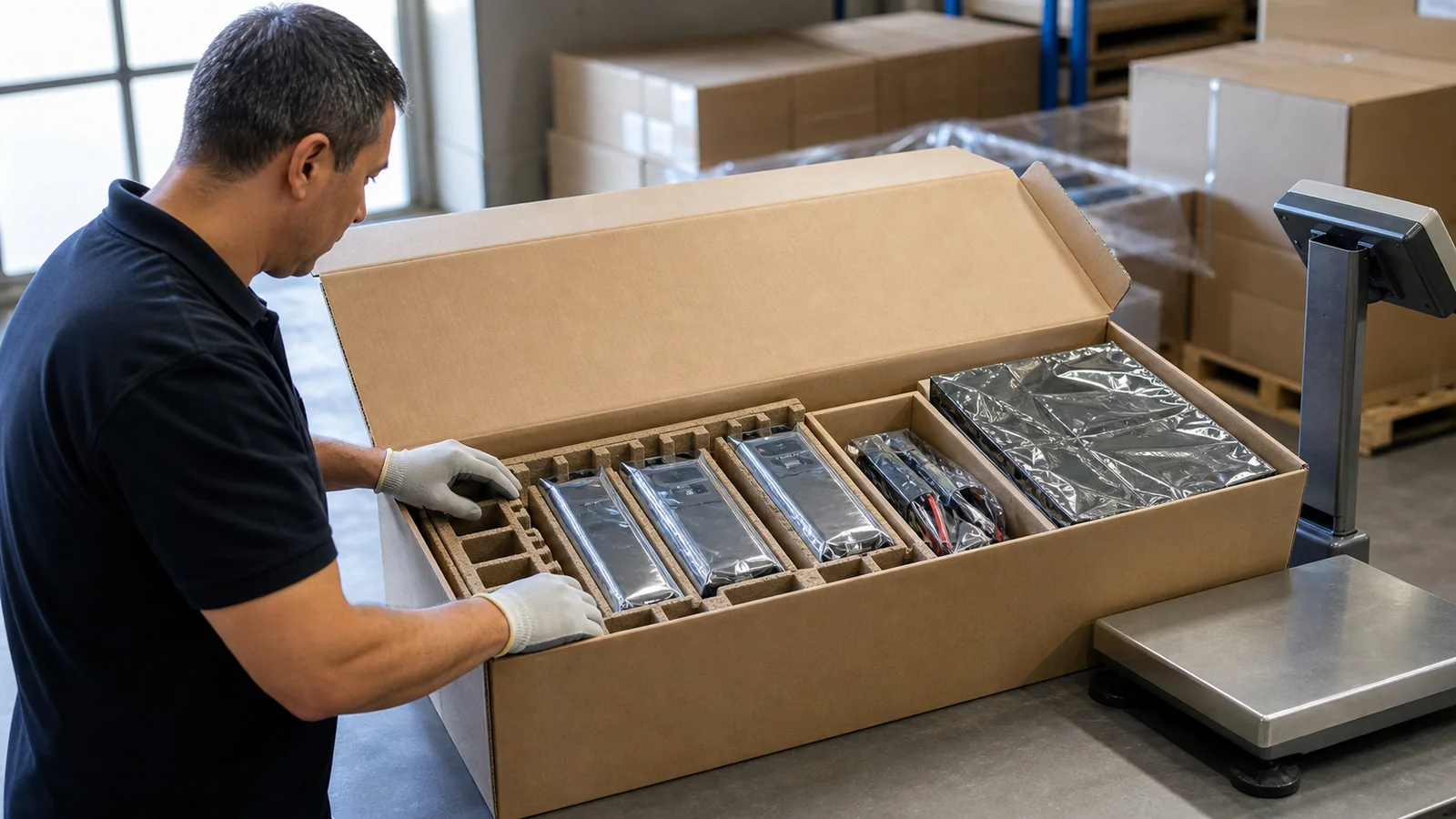
For electronics freight from china, treat the battery configuration as the first booking variable, not a detail to add after the air quote. Identify whether cells are installed in equipment, packed beside equipment, or shipped alone; then provide chemistry, rating, quantity, final packing, and available safety documents for route-specific review. Protect the electronics separately against impact, moisture, and electrostatic discharge, and confirm insurance evidence, customs descriptions, and current carrier rules before dispatch.
Decision framework for electronics freight from china
Use the table as a pre-booking filter. It does not choose a carrier or customs treatment by itself; each row identifies the physical facts, responsible party and written evidence that must agree for this shipment.
| Situation | Best fit | Avoid when | Verify before booking |
|---|---|---|---|
| Electronics with no batteries or other restricted contents | Compare air, express, and ocean using final packed dimensions, value, deadline, and handoff needs | The supplier has not checked accessories, samples, or backup cells hidden in the set | Signed commodity statement, model list, packing photos, final carton dimensions, and current carrier acceptance |
| A lithium battery is installed in each device | Request air acceptance for the exact device-and-battery configuration before pickup | The quote relies only on the marketing model name or an old shipment approval | Battery chemistry, watt-hour or lithium-content data, unit count, packing configuration, and requested test records |
| Spare batteries are packed with equipment | Separate the spare-battery count in the cargo record and obtain configuration-specific routing | Spare cells are loose, unprotected, or omitted from the invoice and packing evidence | Terminal protection, inner packing, quantity per package, safety documents, marks, and carrier instructions |
| Batteries or power banks ship without equipment | Use a service that has explicitly accepted standalone battery cargo for the proposed route | A general-cargo booking is being used because the finished device moved previously | Exact cell or battery specification, state and condition, packing method, test evidence, and written acceptance |
| High-value fragile electronics contain mixed models | Use carton-level model records, stronger transport packing, and a documented insurance decision | Retail boxes carry the stack load or serial and carton evidence cannot be reconciled | SKU map, declared value, serial-record requirement, internal packing photos, exclusions, and claim evidence |
Freeze the battery configuration before requesting an air route
A battery declaration should describe the shipment that will physically move. Record the electronic product, model, battery chemistry, rating, number of cells or batteries per unit, total units, and whether each battery is installed, packed with equipment, or shipped alone. Add the battery manufacturer and available test or safety records requested by the carrier. A product brochure is not a substitute because two visually identical models may contain different batteries. Ask the supplier to sign off on the final configuration and attach photographs of the open inner pack before the forwarder seeks acceptance.
Configuration control matters after the first review as well. A supplier may add a spare battery, change cell capacity, substitute a model, or combine repair parts after the booking request. Any of those changes can alter acceptance, packing, documentation, or route options. Put a release hold on the shipment until the final purchase-order allocation matches the approved cargo record. If the forwarder receives only a generic description such as electronic accessories, it cannot reliably distinguish an unpowered cable from a battery-powered device. Recheck the current carrier and regulatory requirements for the actual route immediately before dispatch.
- Record battery status by model, not only by purchase order.
- Replace estimated carton data after final packing.
- Reopen acceptance review whenever the configuration changes.
Separate transport evidence from import and product records
An MSDS or safety data sheet is useful input, but it is not a universal shipping passport. Depending on the battery and route, the reviewing carrier may ask for a test summary, specification sheet, packing details, declarations, photographs, or other evidence. Build one controlled document folder with revision dates and model references, then ask which items are required for this booking. Do not reuse a document merely because the factory name matches. The model, battery, rating, and packing shown in the evidence must correspond to the goods, and current IATA and carrier instructions should be checked before cargo leaves the supplier.
Customs and market-access records answer different questions. The commercial invoice should identify the actual device and its use in plain language, while the packing list should reconcile models, quantities, cartons, dimensions, and weights. The importer remains responsible for confirming classification, valuation, product compliance, permits, and destination requirements with qualified advisers where needed. A carrier accepting a battery does not establish that the product may be imported or sold. Assign an owner for each evidence set, record unresolved questions, and prevent pickup until the transport file and the importer file both match the final shipment.
Design transport packing around impact, moisture, and electrostatic risk
Battery-compliant packing and device protection are related but not identical. Inner packaging may need to prevent movement and short circuits, while the product may also need anti-static bags, nonconductive cushioning, corner protection, moisture barriers, or a stronger outer carton. Keep terminals and connectors from contacting metal parts. Do not let decorative retail packaging carry the freight stack load unless it has been tested for that duty. The packer should document the final arrangement before closing the carton, including separators, cushioning clearances, accessory placement, and any orientation or stacking limits that the warehouse must preserve.
Use the final packed carton for dimensional and handling decisions. Foam, dividers, double-wall cartons, and pallets can increase chargeable volume even when the device weight is unchanged. Record the longest side, all three exterior dimensions, gross weight, carton count, and whether cartons can be stacked. A hypothetical example: if a last-minute foam insert increases carton height, the original air quote may no longer represent the cargo even though the number of devices is unchanged. Re-measure after every packing change, photograph sealed cartons and pallets, and reconfirm the selected service before collection.
- Photograph open inner packing and the sealed outer carton.
- Map each carton ID to model and quantity.
- State non-stackable or orientation limits before warehouse receipt.
Make the insurance decision before custody changes
High invoice value does not automatically mean full loss recovery. Ask for the proposed insurance basis, covered journey, exclusions, packing conditions, valuation method, deductible if any, and deadlines for reporting visible or concealed damage. Compare those terms with the replacement exposure and the evidence the buyer can actually produce. Standard carrier liability and cargo insurance are not interchangeable. The decision belongs in writing before pickup, because arranging cover after a loss or after the cargo has entered transit is not a workable control. Never reduce the declared value simply to make the shipment appear easier or cheaper.
Build an evidence trail that can survive multiple handoffs. Record serial numbers when commercially necessary, carton and pallet IDs, seal numbers where used, item values, packing photographs, pre-dispatch condition, and the person releasing the cargo. Tell the destination team how quickly to note exceptions, photograph external and internal damage, preserve packaging, and notify the responsible parties. For a split shipment, allocate models and values separately to each movement. This does not guarantee a claim outcome, but it prevents a vague inventory record from undermining customs reconciliation, shortage investigation, or the insurer’s review.
Close the customs and destination handoff before pickup
A usable customs description names the electronic item and its function rather than relying on words such as parts, samples, or gadgets. Check that model, quantity, value, origin information, battery disclosure, and carton totals agree across the invoice, packing list, booking record, and physical goods. The importer or broker should confirm destination classification and product-specific requirements before collection. If a model is removed or rerouted, revise the documents for the cargo that will actually travel. Never treat the fulfillment warehouse, airport terminal, or final customer as the importer unless that responsibility has been explicitly accepted.
The final handoff plan should name the service endpoint and the receiver’s tasks. For airport delivery, confirm who handles import clearance, terminal release, local collection, storage risk, and delivery after arrival. For door service, confirm address type, appointment, access, signature, and exception contacts. Put rate validity, cargo acceptance, final dimensions, document approval, insurance choice, and the escalation path into one booking gate. Because battery, customs, and carrier rules can change, verify the current requirements for the commodity, origin, route, and destination again before the supplier dispatches the cartons.
Inputs to send before requesting a quote
A useful quote begins with final cargo facts and named handoffs. Send the following information together so the response can separate assumptions from confirmed scope instead of hiding gaps inside one total price.
- Exact electronic product name, function, model, and condition
- Battery chemistry and whether batteries are installed, packed with equipment, or alone
- Watt-hour rating or other applicable battery specification for each model
- Cell or battery quantity per device, per carton, and in the complete shipment
- Available test summary, MSDS or safety data, specification sheet, and requested declarations
- Final carton count, dimensions, gross weight, pallet data, and stackability
- SKU, model, serial-record, and carton-mapping requirements
- Declared value, currency, insurance request, and replacement exposure
- Pickup address, supplier contact, cargo-ready date, and configuration-change contact
- Destination airport or address, importer and broker status, deadline, and delivery handoff
- Fragile, anti-static, moisture, orientation, and stacking controls
- Photographs of batteries, open inner packing, closed cartons, and final pallets
Failure modes to control before dispatch
| Trigger | Consequence | Control |
|---|---|---|
| The supplier adds spare batteries after acceptance | The approved configuration no longer matches the physical cargo, creating a hold or rerouting decision | Freeze the model-and-battery list and reopen carrier review after any change |
| An old MSDS is submitted for a different battery model | The evidence cannot support the current booking and acceptance may be withdrawn | Match document identifiers, ratings, revisions, and manufacturer data to the shipped units |
| Retail boxes are used as the only transport protection | Stacking, vibration, moisture, or electrostatic exposure damages devices or presentation packaging | Approve an outer packing design and record the completed inner arrangement before dispatch |
| Declared value and serial records are incomplete | Customs, shortage, insurance, and replacement investigations begin from conflicting evidence | Reconcile model, carton, value, and required serial data before custody changes |
| Destination importer and terminal pickup roles are assumed | Released cargo accumulates delay or storage while no party owns clearance and collection | Name the importer, broker, release contact, pickup party, and service endpoint in writing |
Official sources and current-rule checks
The sources below support the regulatory or carrier-facing distinctions in this guide. Requirements can change by date, product, route and importer, so recheck the current primary source and the accepting carrier before dispatch.
- International Air Transport Association – Batteries: Current battery classification, packing, documentation and air-transport guidance.
- U.S. Customs and Border Protection – Precise cargo descriptions: Plain-language commodity descriptions must be specific enough to identify the goods.
- U.S. Customs and Border Protection – Importing into the United States: Commercial invoice, packing, marking and product-specific import preparation for U.S. entries.
- UPS Supply Chain Solutions – Chargeable and volumetric weight: Mode-specific chargeable-weight concepts for air, express and LCL freight.
Related Sendwin shipping resources
Use the industry logistics hub to compare cargo-specific readiness controls before choosing a route. See industry logistics checklists for China freight.
Send the final battery configuration, packing data, value, and handoff scope through the quote form only after the cargo record is complete. See request an electronics freight quote.
Review the air freight service when the accepted electronics need an airport or door handoff built around chargeable weight and deadline. See air freight service from China.
Compare international express for small accepted samples or repair units after checking battery and parcel restrictions. See international express options for samples.
Use warehouse consolidation when models from several suppliers need receiving records, repacking, or configuration verification before export. See warehouse consolidation and packing checks.
Frequently Asked Questions
Is an MSDS enough to book electronics with lithium batteries by air?
Not necessarily. The route reviewer may also require battery specifications, a test summary, packing details, declarations, photographs, or other current evidence tied to the exact configuration.
Can one approval cover every model from the same supplier?
Do not assume that it can. Battery chemistry, rating, quantity, installation method, and packing can differ by model, so each shipped configuration should match the evidence and written acceptance.
When can ocean freight make sense for electronics?
Ocean may fit planned volume when inventory timing, moisture control, handling exposure, value, and destination costs are acceptable. Compare the complete route and packing requirement rather than using the main freight line alone.
What should the receiver photograph if electronics arrive damaged?
Photograph the unopened exterior, shipping condition, carton and pallet IDs, seals where used, internal cushioning, and the affected models. Preserve the packaging and follow the notification deadlines agreed for the carrier and any insurance policy.
Share the Post: