

Shipping Electronics With Lithium Batteries From China: Packaging, Documents, Mode, and Risk Checklist
Primary-source baseline captured on 16 July 2026. Carrier acceptance, customs treatment, rates and schedules can change by shipment; recheck the linked authority and the accepting provider before cargo release.
Shipping electronics with lithium batteries from China requires a model-level classification and acceptance file before a mode is booked. Identify battery chemistry, cell or battery model, Watt-hour rating or lithium content, whether it is installed in equipment, packed with equipment or shipped alone, quantity, condition and state of charge. Match that configuration to current modal rules and the accepting carrier’s variations. A generic MSDS, a battery label or a supplier statement by itself does not establish that the actual packed product is accepted.
Electronics battery configuration acceptance matrix
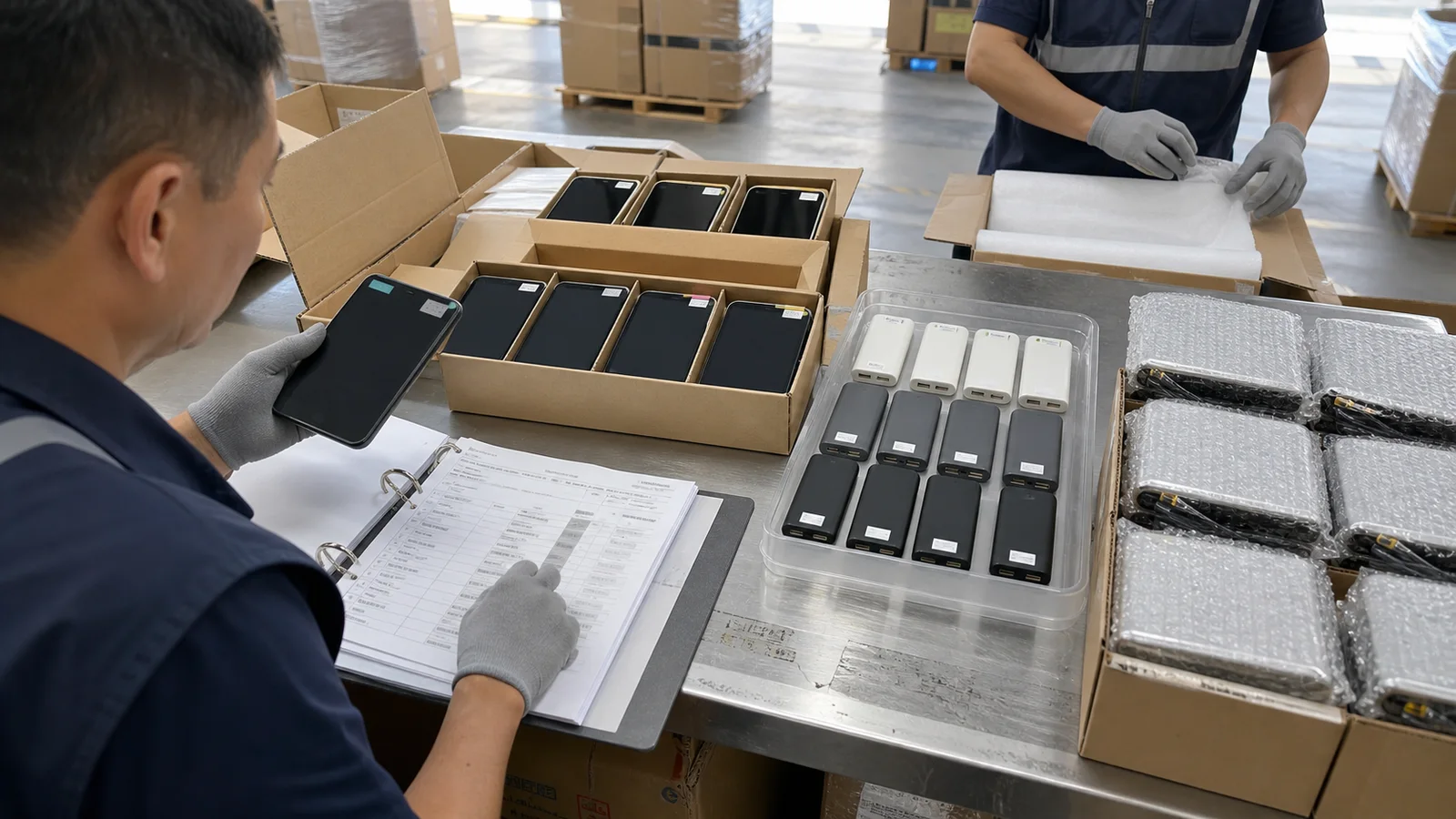
Start with the physical configuration presented to transport. Products sold under one catalog can fall into different transport cases when batteries are installed, packed separately or treated as standalone power sources.
Information-gain asset: Turn shipping electronics with lithium batteries from China into a shipment-readiness matrix covering acceptance-sensitive contents, packing evidence, documents, mode rejection rules, and exception ownership.
| Packed configuration | Evidence set | Primary acceptance question | Release blocker |
|---|---|---|---|
| Battery installed in equipment | Model data, UN test summary and equipment packing | Is the equipment protected against activation and battery damage? | Model or battery cannot be traced |
| Battery packed with equipment | Battery identity, quantity and compliant inner/outer packing | Does the packing instruction and current stack-test condition apply? | Loose battery movement is uncontrolled |
| Battery or power bank shipped alone | Standalone battery classification and current modal evidence | Is the route, aircraft type and state of charge accepted? | Passenger-aircraft or provider restriction unresolved |
| Mixed battery models in one shipment | Per-model matrix and package allocation | Can every package be tied to one accepted model case? | One generic report covers unknown models |
| Damaged, defective or recalled item | Condition assessment and specialist instruction | Is transport permitted under the proposed method? | Cargo enters ordinary service without approval |
Build a battery identity record for every electronics SKU
The commercial product name is not enough. Map each electronics SKU to the exact cell or battery model inside it and record the technical facts used for classification.
Capture chemistry, rechargeable or non-rechargeable status, nominal voltage, rated capacity, Watt-hour rating where applicable, lithium content where applicable, cell count, battery count per item, package quantity and configuration. Link the manufacturer and test-report identifiers to that model.
Control substitutions. A supplier that replaces a battery model after production can invalidate an earlier evidence match even when the finished device name is unchanged. Require change notice, photographs and a refreshed acceptance review before packing continues.
- Finished electronics SKU and revision.
- Cell or battery manufacturer and exact model.
- Chemistry, rating and configuration.
- UN number and applicable packing case as reviewed.
- Evidence file, issue date and reviewer.
Verify UN test evidence instead of collecting a generic certificate
Lithium cells and batteries are subject to the UN Manual of Tests and Criteria framework. The useful evidence must identify the actual model and provide the test-summary elements required by the applicable rules.
Check manufacturer and laboratory identity, test report number and date, battery description, model numbers, mass, rating or lithium content, tests and results, referenced manual edition and authorised signatory. A PDF titled UN38.3 is not sufficient if the shipped model is absent or altered.
Keep safety data as supporting product information, not as a substitute for the classification and test trail. Ask the trained dangerous-goods party and accepting provider what documentation must travel with or be retained for the proposed mode and service.
| Evidence check | Pass condition | Failure signal | Owner |
|---|---|---|---|
| Model trace | Shipped battery model appears in summary | Family name only | Supplier and manufacturer |
| Technical identity | Rating, chemistry and physical description agree | Conflicting label or specification | Supplier |
| Test record | Report, laboratory, tests and results are identifiable | Certificate without traceable report | Manufacturer |
| Change control | Current model matches tested type | Unreviewed component substitution | Buyer and supplier |
Apply current 2026 air-transport controls
IATA’s 67th Edition Dangerous Goods Regulations took effect on 1 January 2026. Battery-related changes and operator variations mean a prior shipment is not automatic evidence of current acceptance.
Classify the configuration, identify the applicable packing instruction and section, then verify quantity, state-of-charge, inner protection, strong outer packaging, movement prevention, short-circuit protection, marks, labels and documents. Current requirements differ among batteries alone, packed with equipment and contained in equipment.
Obtain written acceptance from the actual airline or service channel after sending final model, package and route facts. Passenger-aircraft and cargo-aircraft conditions, consolidator restrictions, transfer points and operator variations can change the executable path.
- Current DGR edition and operator variations checked.
- Packing instruction and section identified by trained personnel.
- State-of-charge and package quantity controls documented.
- Marks, labels and declaration path confirmed.
- Final route and accepting provider approved in writing.
Design packing around battery and device failure modes
Electronics packing must protect both the device and its energy source. A retail box may prevent scratches yet fail to control activation, terminal contact, crushing or movement in a freight package.
Prevent short circuits with protected terminals and separated conductive items. Secure equipment against movement and unintended operation. Use cushioning and outer packaging appropriate to package weight, stacking and handling; do not allow chargers, metal accessories or spare batteries to move freely.
Record package construction with photographs, material specifications, quantity per package, closure method and label placement. When repacking or consolidation changes the outer package, rerun the marked-package and acceptance check.
| Failure mode | Packing control | Evidence | Stop condition |
|---|---|---|---|
| Short circuit | Terminal protection and separation | Close-up packing photograph | Exposed or movable terminals |
| Unintended activation | Switch protection or device lock | Functional packing check | Device can power on in package |
| Crushing or movement | Cushioning, dividers and strong outer package | Pack test and final photograph | Contents shift under handling |
| Model mixing | Package-level SKU and battery allocation | Controlled packing list | Package contents cannot be traced |
Compare air and ocean without assuming ocean is unrestricted
Air can protect urgent inventory when the accepted configuration and route are known. Ocean may suit stable volume, but dangerous-goods declaration, carrier, port and container requirements still need review.
For each option, ask for the exact service, route, transfer points, acceptance basis, cutoffs, documentation, package limits, surcharges and rejection process. Do not compare a confirmed ocean path with an air estimate that has not passed battery review.
Separate main transport from origin dangerous-goods handling, inspections, storage, destination customs and delivery. Build contingency time for evidence questions and carrier rejection, then assign who can choose repacking, alternate service or return.
- Mode and provider acceptance reference.
- Dangerous-goods handling and documentation scope.
- Origin, transfer and destination restrictions.
- Customs and product-compliance owner.
- Rejected-cargo storage and recovery plan.
Worked control example: devices, spare batteries and power banks
A shipment combines tablets with installed batteries, boxed spare batteries and power banks under one broad product description. The supplier offers one test report for the tablet battery family.
- The buyer separates finished-product SKUs and maps every installed, spare and power-bank battery to its exact manufacturer model.
- The supplier obtains model-specific test summaries and identifies each transport configuration instead of treating all pieces as batteries contained in equipment.
- A trained dangerous-goods reviewer assigns the applicable current packing cases and package limits, then the forwarder requests route-specific carrier acceptance.
- Packing, marks, documents and package allocation are photographed and reconciled before the approved cargo enters the warehouse.
The power banks and spare batteries are no longer hidden inside the equipment description, so each configuration can follow its own accepted path.
Failure controls before cargo release
Use this table as a stop-release check. A responsible owner should resolve each trigger against the same cargo and document version before the shipment moves to the next handoff.
| Failure trigger | Operational consequence | Required control |
|---|---|---|
| One UN test file is used for all models | The shipped batteries may not be traceable to a tested type | Create a SKU-to-battery-model matrix and verify each summary |
| Power banks are described as electronics accessories | Standalone battery treatment can be missed | Classify the actual transport configuration, not the retail category |
| Prior-year airline acceptance is reused | Current 2026 rules or operator variations may differ | Refresh trained review and route-specific acceptance |
| Outer package changes during consolidation | Marks, protection and package limits may no longer match | Reinspect and document the final outer package |
| Damaged or swollen unit enters ordinary cargo | A prohibited or specialist case is presented as routine | Segregate the unit and obtain qualified disposition instructions |
Quote-ready data handoff
Send the inputs together and label estimates. This gives the forwarder, carrier, broker and consignee one controlled starting version instead of a price request assembled from conflicting messages.
- Finished electronics SKU and quantity
- Battery manufacturer and exact model by SKU
- Chemistry, voltage, capacity and Watt-hour rating or lithium content
- Installed, packed-with or standalone configuration
- UN test summary and supporting product evidence
- Battery and equipment condition including damage or recall status
- Final package count, dimensions, gross weight and allocation
- Required origin, destination, mode and delivery event
- Current dangerous-goods classification and packing review
- Accepting carrier or service approval reference
Primary sources and verification boundary
These sources support the document, customs or dangerous-goods distinctions used in this guide. They do not replace a product-specific ruling, licensed customs advice or carrier acceptance for the actual shipment.
- International Air Transport Association – 2026 lithium and sodium-ion battery guidance: Current 2026 classification, state-of-charge, packing, marking, documentation and supply-chain responsibility guidance for air transport.
- International Air Transport Association – Batteries: Current battery classification, packing, documentation and air-transport guidance.
- U.S. Pipeline and Hazardous Materials Safety Administration – Lithium Battery Guide for Shippers: Scenario-based U.S. transport guidance by battery chemistry, size, configuration and transport condition.
- UNECE – UN Manual of Tests and Criteria Revision 8 and Amendment 1: Current UN dangerous-goods test framework includes lithium-cell and battery classification and test requirements under subsection 38.3.
Related Sendwin resources and next actions
Use the links below to move from the reference answer into a live shipment decision. Each anchor identifies the destination topic so the relationship remains useful to buyers and search systems.
Compare this evidence model with other product-specific controls in Sendwin industry shipping guides.
For accepted urgent cargo, review the air freight service from China.
For larger accepted shipments, define the ocean freight handoff.
Reconcile declarations and transport records through the shipping documents hub.
Assign import and product-entry responsibilities in the customs clearance guide.
Send the battery matrix and final package data with the freight quotation request.
Continue the industry cargo workflow with the lithium battery shipping from China.
Frequently asked questions
The short answers below preserve the responsibility boundary. Confirm the actual cargo, date, lane, importer and accepting provider before relying on a general answer for release.
Is an MSDS enough to ship electronics with lithium batteries?
No. Safety data can support the file, but it does not replace model-specific classification, UN test evidence, current packing review and route-specific carrier acceptance.
Are power banks treated as batteries contained in equipment?
Do not assume that. A power bank is generally presented as a battery rather than as the equipment it powers, so classify its actual transport configuration with a trained party.
Can electronics with batteries always move by sea?
No mode is automatically unrestricted. Ocean carriers, ports and dangerous-goods rules still require accurate classification, packing, declaration and acceptance for the actual cargo.
What changed for lithium batteries in 2026 air cargo?
The IATA 67th Edition DGR applies from 1 January 2026 and includes battery-related updates. Check the current edition, packing instruction and operator variations for the shipment rather than relying on an older checklist.
Ready to test the plan against final cargo data? Request a shipment-specific freight quotation.
Share the Post: