

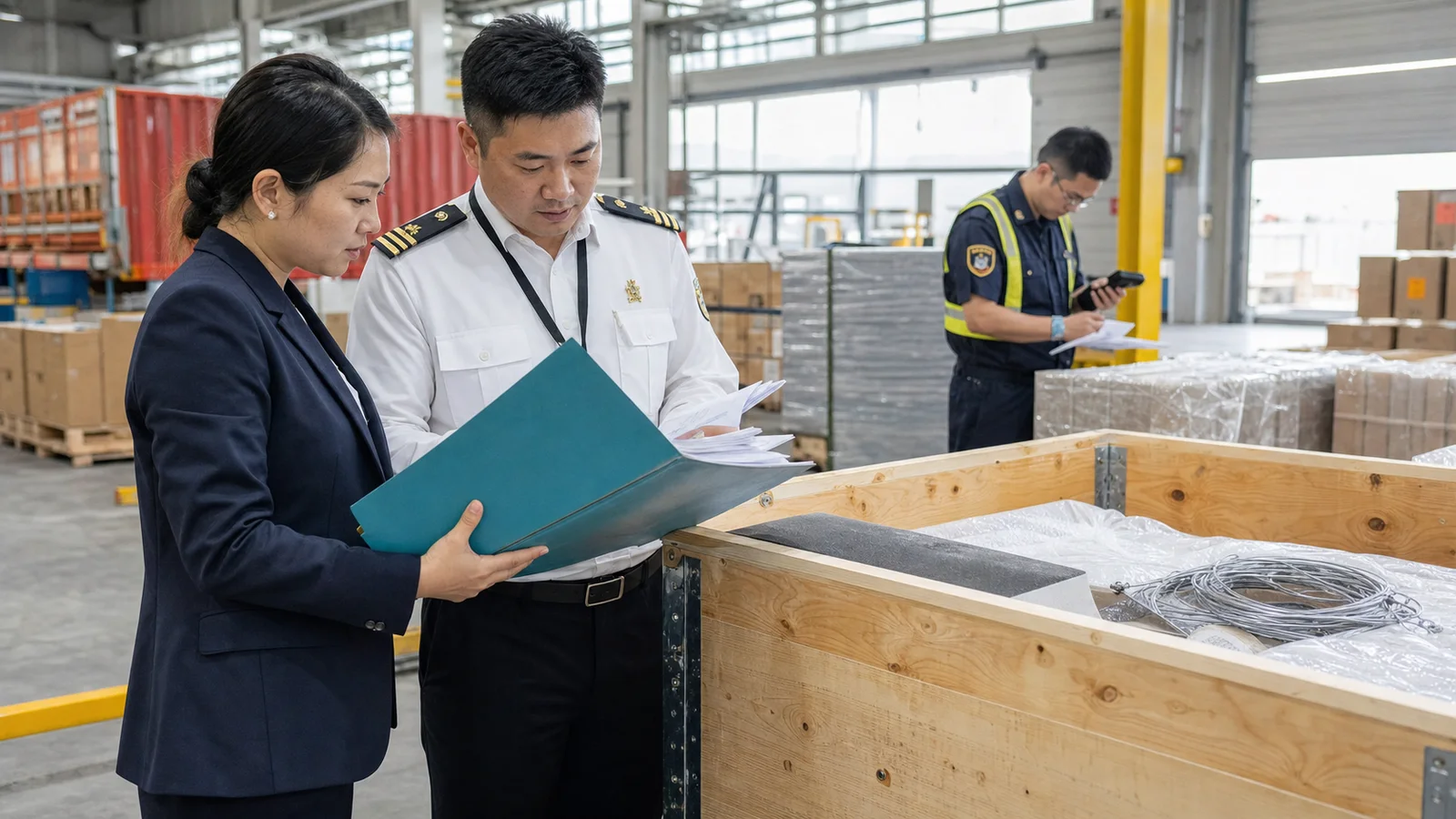
Primary-source baseline captured on 16 July 2026. Carrier acceptance, customs treatment, rates and schedules can change by shipment; recheck the linked authority and the accepting provider before cargo release.
A customs broker is a person or company authorized under the destination country’s rules to conduct defined customs business for another party. In the United States, CBP licenses brokers to transact customs business for importers, including entry preparation and electronic filing. Hiring a customs broker does not transfer the importer’s ultimate responsibility for classification, value, origin, admissibility or other import requirements. Before cargo moves, the importer should approve the broker’s authority, scope, instructions, data source, escalation path and entry evidence rather than treating customs clearance as an unnamed line in a freight quote.
Customs broker trigger and responsibility matrix
Use this matrix to decide when a licensed or otherwise authorized customs representative is needed and which facts still require importer approval. The exact legal model varies by country, so the destination authority controls.
Information-gain asset: Define customs broker in one quotable paragraph, then add trigger, owner, operational consequence, evidence, exception and related-decision modules that dictionary pages omit.
| Shipment event | Broker role | Importer-owned decision | Release evidence |
|---|---|---|---|
| Pre-arrival entry preparation | Validate filing data and prepare the permitted declaration | Commodity, value, origin, importer and intended procedure | Approved instruction set and filing reference |
| Product subject to another agency | Transmit or coordinate required entry data where authorized | Admissibility, registration, permit and product evidence | Agency status and named compliance owner |
| Classification or value uncertainty | Flag the issue and execute the approved treatment | Reasonable-care analysis or ruling decision | Written rationale and supporting records |
| Inspection, hold or document request | Receive notices and coordinate the customs response | Provide truthful product and transaction evidence | Notice, response log and release decision |
| Post-entry correction or audit | Prepare the authorized customs transaction | Approve facts, disclosures and retained support | Submitted correction and acceptance record |
Define customs business before assigning a broker
The phrase customs broker is jurisdiction-specific. Start with the destination authority’s definition and the actual transaction instead of assuming every forwarder, courier or destination agent holds the required authority.
CBP defines U.S. customs business around transactions concerning entry and admissibility, classification and valuation, duties and related filings. A broker conducting that business for others needs the applicable license and permit. Other countries may use customs agent, customs representative or declarant terminology and may distinguish direct from indirect representation. Record the legal entity, license or registration, office, responsible contact and territory in which it may act.
Do not infer broker authority from a transport quotation, email signature or warehouse address. Ask which entity will appear in the declaration, whose identifier will be used, who grants power of attorney, which customs system receives the filing and who can answer an authority query. A freight provider may coordinate the handoff while a separate licensed broker files. Keep those roles visible in the shipment responsibility matrix.
- Destination country and customs procedure.
- Broker legal name and current authority.
- Importer of record or equivalent declarant identity.
- Power-of-attorney or representation model.
- Filing system, office and escalation contact.
Separate broker execution from importer responsibility
A broker can prepare and transmit a declaration, but it cannot invent the facts that establish what the product is, how it was sold, where it originated or whether it is admissible.
The importer should provide a technical description, model and material information, proposed classification, commercial invoice, packing list, transaction-value support, origin evidence and any product-control records. The broker should identify missing or contradictory data and explain the filing consequence. The importer or its qualified adviser approves material positions before submission. A broker-selected code copied from a short invoice description is not a substitute for a documented classification process.
Product compliance remains a distinct workstream. Food, medical devices, chemicals, machinery, textiles, toys and other regulated goods may involve agencies beyond customs. The broker may transmit agency data, but the product-responsible party owns registrations, tests, labels, permits and admissibility facts. Write that boundary into the instruction file so a customs release is not mistaken for proof that the product may lawfully be sold or used.
| Fact or decision | Primary owner | Broker action | Evidence retained |
|---|---|---|---|
| Product identity and use | Importer and supplier | Test description for filing sufficiency | Specification, model and photographs |
| Classification | Importer | Review and file approved code | Classification rationale or ruling |
| Customs value | Importer | Apply approved valuation inputs | Invoice, additions and relationship support |
| Origin | Importer and producer | Declare approved origin treatment | Production or preference evidence |
| Entry transmission | Authorized broker | Submit, monitor and correct | Acknowledgement and entry summary |
Issue a controlled brokerage instruction before arrival
A useful broker instruction is a versioned operational record, not a folder of attachments with no statement of which values are final. It should connect the commercial transaction, physical packages and requested customs treatment.
List seller, buyer, consignee, importer, broker and carrier as separate parties. State the Incoterm and named place, but also state who is paying duties and taxes, who authorizes the broker and who can approve a correction. Reconcile invoice lines to packing quantities and transport documents. Include the expected arrival, port, carrier reference, container or master and house references where available, and the deadline for filing or responding.
Mark assumptions and unresolved fields. If the final freight addition, assists, royalty treatment, origin support or agency status is pending, do not let a placeholder silently become a declaration fact. Use an exception log with owner and deadline. After changes to quantity, model, value, consignee or routing, issue a new instruction version and obtain broker acknowledgement rather than sending an isolated email correction.
- Controlled invoice and packing-list versions.
- Specific description, classification proposal and origin.
- Value method, additions and currency.
- Importer identifier, bond or payment arrangement where applicable.
- Agency controls, permits and exception owners.
Evaluate a customs broker with evidence, not promises
Selection should test authority, product competence, communication and record controls. A low entry fee can be outweighed by storage, correction or enforcement exposure when the operating model is weak.
Verify the broker through the relevant authority or official listing. Ask who supervises the account, which product categories and ports the team handles, how it validates powers of attorney, how it protects records and how quickly it escalates a rejection or agency hold. Request a sample redacted status workflow showing pre-arrival review, accepted filing, customs messages, release and final entry documents.
Define service levels by event rather than a broad promise to clear customs. Useful events include instruction received, data review complete, entry submitted, authority accepted, examination notice received, response sent, release granted and final entry package delivered. Name after-hours contacts for cutoff-sensitive cargo. Confirm whether classification research, bonds, duty advancement, agency filings, inspections, disbursements and post-entry work are included or separately authorized.
| Broker check | Acceptable evidence | Warning signal | Buyer response |
|---|---|---|---|
| Authority | Current official listing or identifier | Only a sales claim | Verify before granting authority |
| Data review | Written intake and exception process | Files are submitted without questions | Require pre-filing approval controls |
| Status reporting | Event and reference-level updates | Only cleared or not cleared | Define milestone evidence |
| Record delivery | Complete final entry package | No retained acknowledgement | Make document handoff contractual |
Close the entry with a review and retention package
Customs work is not complete at the delivery gate. The importer should compare the filed entry with the approved facts while a correction remains operationally manageable and then retain the required support.
Obtain the declaration or entry summary, classification, value, origin, quantities, duty and tax calculation, agency messages, release record, payment evidence and any inspection or correction correspondence. Compare them with the approved commercial and technical file. Investigate differences instead of assuming the customs system changed them automatically. A broker invoice is not the same as a final entry record.
Record who performed the post-entry review, what exceptions were found and whether a correction, protest, disclosure or other destination-specific process is needed. Retain records for the applicable period under the importer’s policy and law. Feed recurring defects back to purchasing and supplier instructions, such as vague descriptions, late assists or inconsistent package counts, so the next shipment is improved before the broker receives it.
- Final declaration and authority acknowledgements.
- Duty, tax, fee and disbursement reconciliation.
- Agency release or hold resolution evidence.
- Post-entry review and correction decision.
- Retention owner and future process changes.
Worked control example: machine parts entering the United States
A U.S. buyer imports two machine-part models from China. Its forwarder says customs clearance is included, but the invoice describes both lines as spare parts and no one has identified the filing broker.
- The buyer asks for the licensed broker entity, confirms its current authority and executes the required power of attorney directly through a verified contact.
- Engineering provides function, material, model, drawings and end-use data; purchasing supplies transaction value and origin records; the buyer approves classification and agency screening.
- The broker receives one versioned instruction, flags a missing assist value and submits only after the buyer resolves it and approves the final data.
- After release, the buyer compares the entry summary with the approved file, retains the acknowledgement and corrects its supplier invoice template for future shipments.
The broker performs licensed filing work while the importer retains visible ownership of product facts, entry positions and post-entry review.
Failure controls before cargo release
Use this table as a stop-release check. A responsible owner should resolve each trigger against the same cargo and document version before the shipment moves to the next handoff.
| Failure trigger | Operational consequence | Required control |
|---|---|---|
| A forwarder is assumed to be the customs broker | Authority and filing responsibility are hidden | Identify and verify the legal broker or representative entity |
| The broker selects facts from a vague invoice | Classification, value or admissibility may be unsupported | Provide and approve a technical and commercial instruction file |
| Customs release is treated as product approval | Market-access obligations can remain unmet | Maintain a separate product-compliance owner and evidence gate |
| Changes are sent in disconnected emails | The broker may file an obsolete cargo version | Issue a versioned instruction and obtain acknowledgement |
| No final entry review occurs | Errors recur and correction windows may be missed | Reconcile the final entry, charges and authority messages |
Quote-ready data handoff
Send the inputs together and label estimates. This gives the forwarder, carrier, broker and consignee one controlled starting version instead of a price request assembled from conflicting messages.
- Destination country, port and intended customs procedure
- Importer legal identity and customs identifier
- Broker or representative authority and power-of-attorney status
- Seller, buyer, consignee and delivery-party identities
- Specific product description, model, material and use
- Proposed classification, origin and supporting rationale
- Transaction value, currency and applicable additions
- Package count, quantity, weight and document versions
- Product-agency controls, permits and responsible owner
- Arrival event, filing deadline and exception contacts
Primary sources and verification boundary
These sources support the document, customs or dangerous-goods distinctions used in this guide. They do not replace a product-specific ruling, licensed customs advice or carrier acceptance for the actual shipment.
- U.S. Customs and Border Protection – Customs Broker Guidance version 2.0: CBP licenses persons to conduct customs business for others and defines broker duties, power-of-attorney, supervision, recordkeeping and national-permit controls.
- Electronic Code of Federal Regulations – 19 CFR Part 111 Customs Brokers: The current federal regulations define customs business, licensing, permits, powers of attorney, responsible supervision, recordkeeping and broker conduct.
- U.S. Customs and Border Protection – Importer and customs broker responsibilities: A licensed customs broker may transact customs business for an importer, but the importer remains responsible for knowing and meeting applicable import requirements.
- U.S. International Trade Administration – Common Export Documents: Official distinctions among commercial invoices, packing lists, air waybills and ocean bills of lading.
Related Sendwin resources and next actions
Use the links below to move from the reference answer into a live shipment decision. Each anchor identifies the destination topic so the relationship remains useful to buyers and search systems.
Place broker instructions inside the shipping documents control hub.
Assign importer and declaration decisions through the customs clearance guide.
Reconcile commercial value and package data with the commercial invoice guide.
Map transport and customs handoffs in the shipping process from China guide.
Review related logistics roles in the freight glossary.
Send the controlled customs and cargo file in a shipment quotation request.
Continue the shipping document workflow with the importer of record.
Frequently asked questions
The short answers below preserve the responsibility boundary. Confirm the actual cargo, date, lane, importer and accepting provider before relying on a general answer for release.
What does a customs broker do?
A customs broker performs customs business that the destination jurisdiction permits it to conduct for clients, such as preparing and transmitting entries. The exact scope depends on local law and the engagement.
Does a customs broker become the importer of record?
Not automatically. The importer-of-record or equivalent role must be deliberately identified under destination rules. A broker may act for that party without replacing its underlying responsibilities.
Is a freight forwarder the same as a customs broker?
No. A forwarder coordinates transport and related logistics services. A customs broker or representative performs regulated customs work. One company may hold both capabilities, but each authority and contract scope should be verified.
When should the broker receive documents?
Early enough to review facts, resolve exceptions and meet pre-arrival or entry deadlines. Send one approved version and update it formally when cargo, value, parties or routing changes.
Ready to test the plan against final cargo data? Request a shipment-specific freight quotation.