

Semiconductor Equipment Shipping From China: Packaging, Documents, Mode, and Risk Checklist
Primary-source baseline captured on 16 July 2026. Carrier acceptance, customs treatment, rates and schedules can change by shipment; recheck the linked authority and the accepting provider before cargo release.
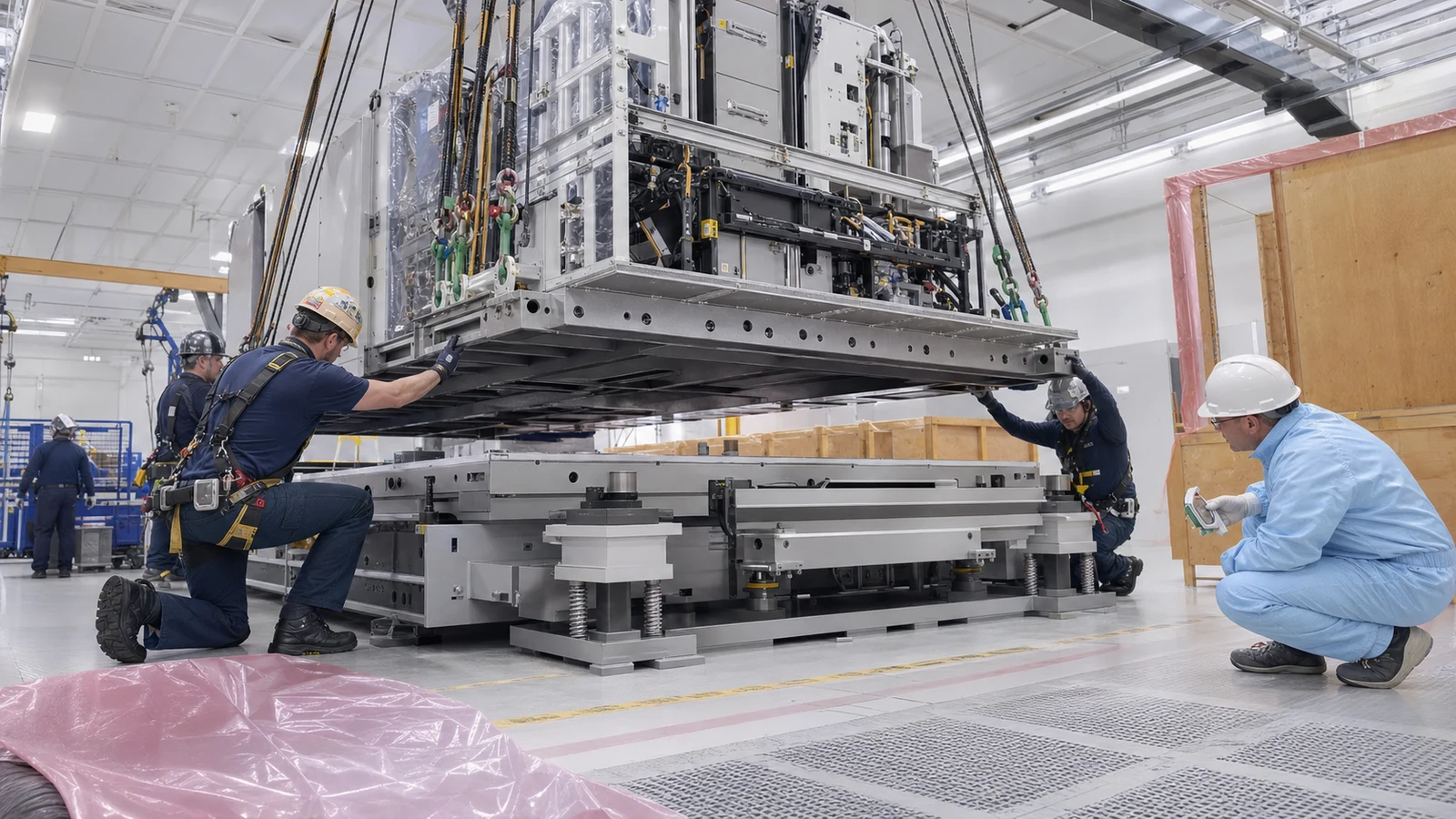
Semiconductor equipment shipping from China requires an engineering-controlled equipment version, not only dimensions and a freight rate. Freeze the serial number, configuration, residual chemicals or gases, clean and dry state, disassembly plan, center of gravity, lifting points, shock and tilt limits, export-control decision, final crate data, route and installation handoff. SEMI E137 addresses final assembly, packaging, transportation, unpacking and relocation of semiconductor manufacturing equipment, while export and reexport controls depend on the actual item, origin of technology, destination, end user and end use. The freight forwarder coordinates movement but cannot invent technical, regulatory or rigging facts.
Semiconductor equipment shipment release matrix
The matrix joins engineering, compliance, packing and site acceptance. Every row should close against the same serial-numbered equipment configuration before the crate leaves the factory.
Information-gain asset: Turn semiconductor equipment shipping from China into a shipment-readiness matrix covering acceptance-sensitive contents, packing evidence, documents, mode rejection rules, and exception ownership.
| Equipment condition | Primary exposure | Decision owner | Stop-release evidence |
|---|---|---|---|
| Complete tool moving as one unit | Center of gravity, vibration, lifting and route clearance | Equipment engineer and rigging lead | Approved lift plan, limits, footprint, weight and route survey |
| Tool split into modules | Configuration loss, interface damage and mixed crates | OEM configuration manager | Module map, serial links, cap-and-protect list and reassembly plan |
| Used process equipment | Residual chemical, gas, vacuum or contamination hazards | EHS and technical owner | Decontamination, drain, purge and safe-state certification |
| Sensitive controlled equipment or technology | Export, reexport, end-use and party restrictions | Exporter compliance owner | Classification, screening and authorization record |
| Cleanroom-bound delivery | Site access, rigging, unpacking and cleanliness failure | Buyer facilities and installation lead | Approved delivery path, staging, unpacking and acceptance procedure |
Freeze the serial-numbered equipment configuration
A model name can conceal options, subassemblies, chemicals and service parts that change weight, hazards, export classification and installation. Build a configuration baseline before dismantling starts.
Record manufacturer, model, serial number, manufacturing date, current owner, function and complete option list. Identify cabinets, pumps, chillers, gas boxes, vacuum components, power modules, computers, sources, sensors and spare parts. Assign each removed module and accessory to a crate ID and photograph every connector, cap, brace and orientation before separation.
Issue controlled drawings for overall and module dimensions, actual weight, center of gravity, lifting points, fork restrictions, floor loading and prohibited orientations. Mark estimated values and replace them with measured values before the final transport instruction. The commercial invoice, packing list, export filing and rigging plan must reference the same baseline.
| Configuration field | Engineering source | Shipment check |
|---|---|---|
| Serial and option list | OEM build and service record | Matches invoice and crate manifest |
| Module interfaces | Disassembly drawing | All ports capped and connectors protected |
| Weight and center of gravity | Measured engineering sheet | Matches lift and restraint design |
| Orientation and limits | OEM transport requirement | Visible indicators and handling marks align |
Establish a clean, dry and safe transport state
Used or tested semiconductor tools can retain process chemicals, gases, oils, coolants, residues, vacuum contamination or energized storage. Shipping release needs a technical safe-state decision.
The OEM, seller and qualified EHS team should define drain, purge, decontamination, lockout, source removal, battery isolation and waste-disposal steps for the exact equipment history. Record the methods, responsible person, date and residual condition. A seller statement saying cleaned cannot substitute for a process-specific certificate when the carrier, border, rigging team or buyer needs evidence.
Protect open vacuum, gas, fluid, optical and electrical interfaces with compatible caps, blanks, bags or dry-gas arrangements. State humidity, temperature, condensation and storage limits. For parts that must remain under controlled atmosphere or vacuum, design monitoring and exception authority before the route is selected.
- Equipment history and process-media inventory.
- Drain, purge, decontamination and lockout procedure.
- Residual-hazard and safe-state certification.
- Protected interface and controlled-atmosphere list.
- Temperature, humidity, condensation and storage limits.
Make the export and end-use decision outside the freight quote
Semiconductor manufacturing equipment and related software or technology can be subject to destination, end-user and end-use controls. The analysis must follow the actual legal jurisdiction and item history.
Identify the exporter, country of export, equipment origin, incorporated controlled content, software, technology, destination, intermediate and ultimate consignees, end user and intended use. Determine the applicable classification and authorization under Chinese law and any other jurisdiction whose export or reexport rules reach the item. Do not assume every China-origin tool is subject to U.S. EAR controls, and do not assume it is outside them without a documented analysis.
BIS guidance expects exporters to provide forwarders with clear classifications, authorization information and transaction facts and to review filings. Screen all parties and diversion indicators. Keep licences, exceptions, no-licence determinations, end-use statements and conditions with the equipment baseline. A forwarder may stop a transaction on red flags but should not be asked to manufacture the legal decision.
| Compliance input | Owner | Evidence |
|---|---|---|
| Item and technology classification | Exporter compliance team | Signed classification rationale |
| Parties and ownership | Sales and compliance | Screening results and escalation |
| End use and installation site | Buyer and exporter | End-use statement and site details |
| Authorization | Exporter or licence holder | Licence, exception or no-licence record |
| Filing review | Exporter with forwarder | Accepted filing and post-filing audit |
Engineer the crate, indicators and restraints
SEMI E137 provides an industry framework for final assembly, packaging, transportation, unpacking and relocation. Convert the OEM limits into a package and monitoring plan for the chosen route.
Design the skid and crate for actual center of gravity, lifting, tie-down, shock, vibration, tilt, moisture and stacking exposure. Use engineered blocking and bolting at approved structural points; do not restrain through covers, precision stages or service piping. Support modules independently and maintain access for lifting equipment. Record torque or fastening checks and final closure photographs.
Select shock, tilt, humidity or temperature indicators only after defining threshold, placement, serial number, activation, reading and response. An indicator sticker without a baseline or disposition procedure adds decoration rather than evidence. For wooden crating and dunnage, verify destination phytosanitary requirements and retain treatment marks or certificates.
- Engineered skid and restraint drawing.
- Center-of-gravity, lifting and fork-access marking.
- Shock, tilt and environmental threshold plan.
- Moisture barrier, desiccant and inspection window where specified.
- ISPM 15 and wood-packaging evidence where applicable.
Select route and equipment from the handling envelope
The transport mode follows the crate and site constraints. Oversize, high-value or orientation-sensitive tools need a surveyed chain of custody, not an airport or port name alone.
Compare air, ocean FCL, flat rack, open top, breakbulk or specialized road options using final crate dimensions, weight, center of gravity, lifting method and weather tolerance. Identify every lift, transfer, terminal dwell, transshipment and storage event. Prefer fewer uncontrolled handoffs when the equipment envelope and budget support it, but validate aircraft, container, door, deck, road and crane limits rather than relying on nominal capacity.
The UNECE CTU Code emphasizes proper packing, load distribution, blocking, bracing and securing. For containerized modules, approve floor loading, restraint and inspection before sealing. For out-of-gauge cargo, document lashing, cover, route permits and survey requirements. Set custody signoffs and indicator readings at origin closure, carrier acceptance, transfers and destination.
| Route option | Useful condition | Mandatory engineering check |
|---|---|---|
| Air freight | Urgency and dimensions fit accepted aircraft path | Aircraft contour, floor load, handling gear and chargeable weight |
| FCL ocean | Modules fit a closed container | Door, floor, restraint, humidity and unloading |
| Open top or flat rack | Height or width exceeds closed-unit limits | Weather protection, lashing, terminal lifts and out-of-gauge route |
| Breakbulk or project cargo | Equipment needs direct heavy-lift handling | Lift engineering, survey, stowage and custody |
| Specialized road | Port or airport to site requires controlled transport | Permits, bridges, turns, vibration and site access |
Design destination rigging and cleanroom handoff before departure
The shipment is not complete at customs release. Confirm the route from truck position through receiving, unpacking, staging and final installation location with the buyer’s facilities team.
Survey gate width, dock, floor loading, elevator, ceiling, turns, cleanroom access, crane or gantry placement, temporary staging and waste removal. Define who removes outer wood, who controls clean unpacking, and where rigging equipment changes. Reconcile crate orientation and lift points with the destination method. If the site is not ready, specify an approved storage environment and inspection interval.
At receipt, photograph crate condition, seals and every indicator before movement or opening. Record exceptions against the crate and equipment serial numbers. The OEM or engineering owner decides whether a triggered indicator requires inspection, alignment checks, functional testing or claim notice. Preserve packaging and sensor evidence until acceptance closes.
- Site route and floor-load survey.
- Rigging method and qualified contractor.
- Staging, clean unpacking and waste plan.
- Crate, seal and indicator readback sequence.
- Engineering acceptance and claim authority.
Worked control example: used metrology tool to an overseas fab
A seller in China plans to ship a used metrology tool in three crates. The first packing list shows only one machine, while the vacuum module, workstation and calibration kit have separate serials and the buyer’s cleanroom route has a tight turn.
- The OEM service and EHS teams freeze the serial-numbered configuration, safe-state process, interface caps, module map, transport limits and measured centers of gravity.
- The exporter documents classification, destination, end user and authorization status, then gives the approved filing data to the forwarder.
- The packer engineers three linked crates with indicators and restraint records; the project team surveys each lift, terminal, road leg and the buyer’s tight cleanroom route.
- At destination, the rigging lead records crate, seal and indicator condition before clean unpacking, and the equipment engineer closes acceptance by module serial number.
The transport file connects legal authorization, physical preservation and installation readiness, preventing an apparently intact crate from arriving without a usable or accountable equipment system.
Failure controls before cargo release
Use this table as a stop-release check. A responsible owner should resolve each trigger against the same cargo and document version before the shipment moves to the next handoff.
| Failure trigger | Operational consequence | Required control |
|---|---|---|
| The quote identifies only one machine model | Options, modules, hazards and crate identities remain uncontrolled | Freeze a serial-numbered configuration and module-to-crate map |
| Cleaned is accepted without a safe-state record | Residual process media can expose handlers or block acceptance | Use a qualified drain, purge, decontamination and certification process |
| The forwarder is asked whether an export licence is needed | A legal decision may be made without item and end-use evidence | Assign classification and authorization to the exporter compliance owner |
| Shock or tilt labels have no threshold procedure | A triggered indicator cannot drive a consistent disposition | Define placement, baseline, reading and engineering response before closure |
| Destination rigging begins after vessel departure | The crate or tool may not fit the site route or unloading equipment | Approve the site survey and rigging plan before origin release |
Quote-ready data handoff
Send the inputs together and label estimates. This gives the forwarder, carrier, broker and consignee one controlled starting version instead of a price request assembled from conflicting messages.
- Equipment manufacturer, model, serial and option configuration
- Module and accessory list by crate ID
- Safe-state, decontamination and residual-media status
- Measured dimensions, weight and center of gravity per crate
- Lifting, orientation, shock, tilt and environmental limits
- Export classification, parties, end use and authorization status
- Origin pickup, every planned transfer and final installation site
- Crate, restraint, indicator and wood-packaging specifications
- Destination route survey, rigging and clean-unpacking plan
- Insurance, survey, exception and engineering-acceptance contacts
Primary sources and verification boundary
These sources support the document, customs or dangerous-goods distinctions used in this guide. They do not replace a product-specific ruling, licensed customs advice or carrier acceptance for the actual shipment.
- SEMI – E137 semiconductor equipment packaging and transportation guide: SEMI E137 addresses final assembly, packaging, transportation, unpacking and relocation of semiconductor manufacturing equipment into the customer environment.
- U.S. Bureau of Industry and Security – Freight forwarder guidance: Exporters must provide clear classification, authorization, end-user and transaction information; using a forwarder does not transfer export-control responsibility.
- UNECE – IMO/ILO/UNECE CTU Code: The CTU Code provides a global non-mandatory practice for packing, load distribution, blocking, bracing and securing cargo in transport units.
- International Plant Protection Convention – ISPM 15: Wood packaging and dunnage phytosanitary requirements for international trade.
- General Administration of Customs of China – Import and Export Declaration Documents: China export declarations may require the contract, invoice, packing list, manifest, transport document and applicable licences to reconcile.
Related Sendwin resources and next actions
Use the links below to move from the reference answer into a live shipment decision. Each anchor identifies the destination topic so the relationship remains useful to buyers and search systems.
Compare high-value equipment with other cargo types in the shipping routes from China hub.
Reconcile the crate manifest and commercial records through the shipping documents hub.
Assign export and import handoffs using the customs clearance guide.
Control crates and modules before main carriage with China warehouse consolidation services.
Compare oversize ocean equipment paths through ocean freight from China.
Build contingent handling and survey exposure into the shipping cost control guide.
Submit one engineering-controlled equipment version through the shipment quotation request.
Continue the route and handoff workflow with the shipping from China to Italy.
Frequently asked questions
The short answers below preserve the responsibility boundary. Confirm the actual cargo, date, lane, importer and accepting provider before relying on a general answer for release.
What information is needed to quote semiconductor equipment shipping from China?
Provide the serial-numbered configuration, module list, safe state, final crate dimensions and weights, centers of gravity, lifting points, transport limits, export status, route and destination rigging plan.
Does all semiconductor equipment from China need a U.S. export licence?
No universal answer is valid. Determine which jurisdictions apply to the actual equipment, software, technology, destination, parties and end use, and document the classification and authorization decision.
Should semiconductor tools use shock and tilt indicators?
Use indicators only when the equipment owner defines suitable thresholds, locations, activation, readings and disposition. They support evidence but do not replace engineered packaging or handling.
Is customs release the end of a semiconductor equipment shipment?
No. The destination plan must cover site access, unloading, rigging, clean unpacking, indicator review, module reconciliation and engineering acceptance at the installation handoff.
Ready to test the plan against final cargo data? Request a shipment-specific freight quotation.
Share the Post: