

Solar Panel Shipping From China: Packaging, Documents, Mode, and Risk Checklist
Primary-source baseline captured on 16 July 2026. Carrier acceptance, customs treatment, rates and schedules can change by shipment; recheck the linked authority and the accepting provider before cargo release.
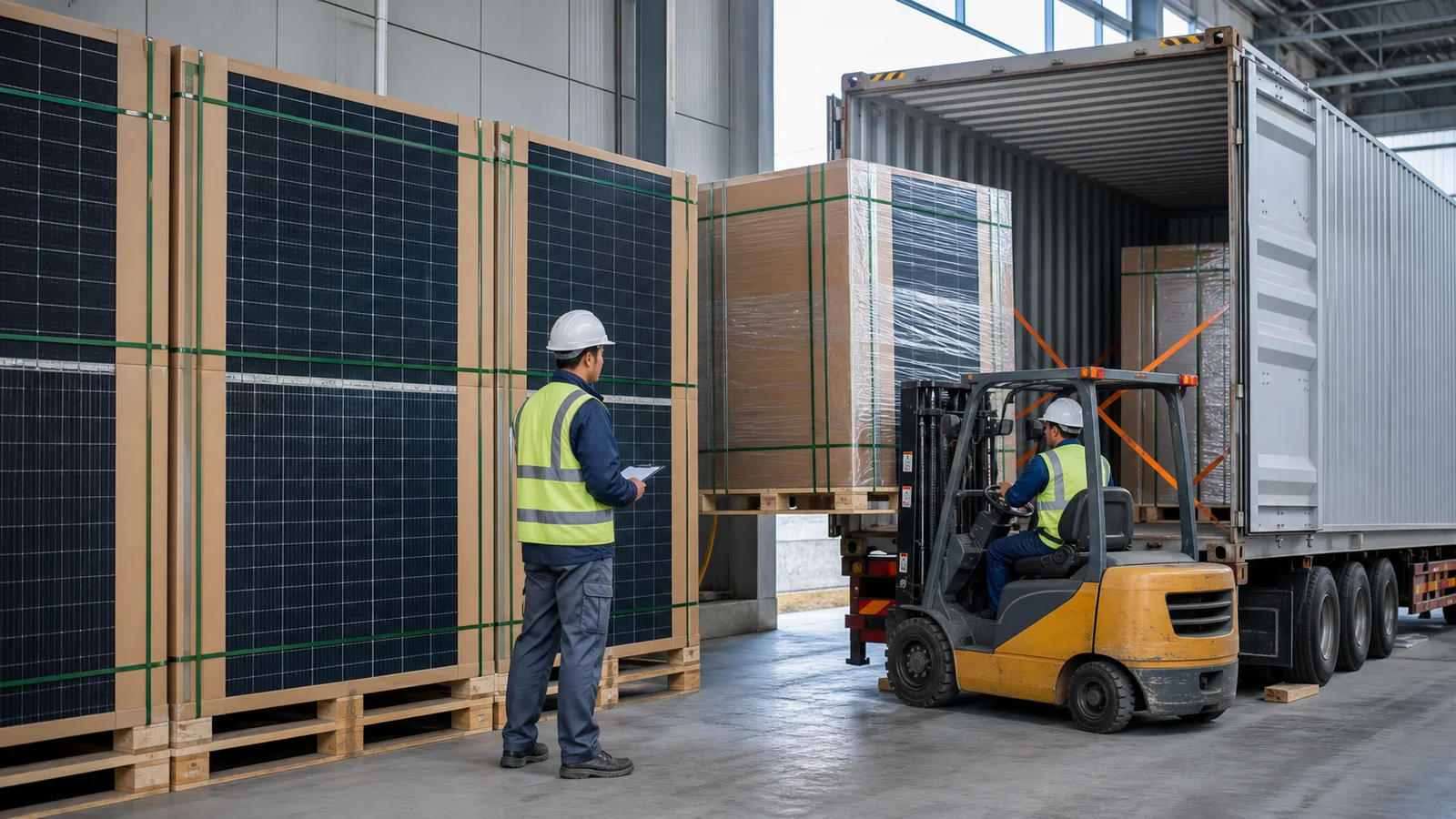
Solar panel shipping from China should preserve the manufacturer’s qualified module package unit from factory inspection through final receipt. Confirm module model and quantity, package design and orientation, gross dimensions and weight, stack and clamp limits, handling method, transport-test evidence, moisture and vibration controls, container load plan, wood-packaging compliance, serial traceability and destination inspection before pickup. Treat batteries, inverters and mounting hardware as separate cargo groups: their acceptance, dangerous-goods, packing and customs requirements are not proven by the photovoltaic module package.
Solar module shipment-readiness matrix
Use this matrix to stop release when product, package, handling or import evidence is incomplete. A pallet count alone cannot show whether modules were qualified, protected and traceable.
Information-gain asset: Turn solar panel shipping from China into a shipment-readiness matrix covering acceptance-sensitive contents, packing evidence, documents, mode rejection rules, and exception ownership.
| Release gate | Required input | Reject when | Evidence |
|---|---|---|---|
| Module package | Model-specific qualified package unit and orientation | Loose modules or unapproved repack | Packaging specification and test reference |
| Handling | Fork, clamp, lifting and stack instructions | Contact can load glass or frame incorrectly | Handling drawing and trained-team signoff |
| Container plan | Dimensions, weight, dunnage, distribution and securing | Void, floor or door checks are unresolved | Load plan and final photographs |
| Cargo classification | Modules separated from batteries and controlled accessories | Description hides battery chemistry or other controls | Item-level packing and declarations |
| Arrival inspection | Sampling, condition and escalation method | Delivery receipt is signed without visible checks | Timed photos, indicators and exception report |
Keep the qualified module package intact
Photovoltaic modules are large, flat and brittle assemblies. Their package should control vibration, shock, edge loading, glass contact and movement as one tested unit, not as individual cartons improvised at the dock.
IEC 62759-1:2022 describes transportation simulation and subsequent environmental testing for complete PV module package units. Ask the manufacturer which model, quantity, package bill of materials, arrangement and test evidence apply to the offered shipment. A pass for one module family or pack count should not be assumed for a different frame, glass, pallet, spacer or stack. Record permitted substitutions and retesting decisions.
NREL logistics material highlights orientation and vibration response as module-specific transport concerns. Preserve the approved vertical or other specified orientation, separators, edge guards, restraint and pallet geometry. Do not remove modules to fill voids or combine partial pallets unless the manufacturer approves a validated repack method. Mark package orientation, stacking and handling restrictions without covering serial or inspection labels.
- Module model and frame configuration
- Approved modules per package unit
- Packaging materials and spacers
- Required orientation and stack limit
- Transportation test or qualification reference
Design handling around glass, frame and package limits
A package that survives line-haul vibration can still be damaged by fork entry, clamp pressure, tilted storage, unsupported overhang or an impact during container stuffing.
Use the manufacturer’s handling drawing to identify approved fork pockets, tine length and spacing, clamp prohibition or pressure, lifting points, pallet-jack path, maximum incline and stacking limit. Inspect pallets and bands before every handoff. Keep the load supported on a level surface and prevent workers or equipment from leaning on module faces. A visibly intact outer wrap does not rule out microcracks or frame deformation.
Define an exception process for dropped, struck, wet, tilted or rebanded pallets. Isolate the package, photograph all sides, record time and handler, preserve shock or tilt indicator data where used and ask the product-quality owner for inspection scope. Do not silently replace damaged outer packaging and return the pallet to the load. The condition history is needed for claims and electrical-quality decisions.
| Handling event | Control | Evidence | Escalation trigger |
|---|---|---|---|
| Forklift pickup | Approved pockets and full support | Operator and fork-position photo | Pallet flex or contact damage |
| Stacking | Manufacturer height and weight limit | Stack-count record | Crushed edge or leaning stack |
| Transfer | Level route and restrained load | Handoff condition photos | Impact, tilt or wetting |
| Repacking | Manufacturer-approved method | New package record | Uncontrolled loose modules |
Control container environment, distribution and securing
A dry container protects against direct weather but can still expose modules to condensation, vibration, void movement and poor weight distribution over a long multimodal route.
Inspect the CTU for structural condition, cleanliness, dryness, odour, light leaks and contamination. The CTU Code advises planning a tight or secured stow, respecting package strength, maximum payload and destination wood-treatment rules. Map each pallet’s dimensions and gross weight, door clearance, forklift access, floor distribution, center of gravity and removal sequence. Fill or block voids without applying damaging force to module packages.
Choose moisture controls from route climate, container condition, package permeability and product instructions. Desiccant quantity should be engineered and isolated from the modules; it is not a cure for wet pallets or a leaking container. Use compliant treated wood where required and retain ISPM 15 evidence. Photograph container number, CSC plate, empty condition, each loading stage, final securing, seal and verified gross mass inputs.
- Clean and dry CTU inspection
- Pallet-by-pallet load drawing
- Door, floor and forklift clearance
- Void filling and securing method
- Moisture, seal and VGM evidence
Separate modules, batteries, inverters and accessories in the cargo file
A solar project shipment can contain several regulatory and damage profiles. One generic description such as solar equipment hides the facts needed by carriers and customs authorities.
List modules by manufacturer, model, quantity, power rating, serial range, country of origin and package. List inverters, optimizers, cables, mounting systems, transformers and spares separately with their own classification and values. Confirm destination product, conformity, trade-remedy, marking or electrical requirements with the importer. Preserve purchase, specification and origin support for the declared treatment.
Identify batteries separately by chemistry, watt-hour rating, configuration, state, package and test evidence. IATA and other dangerous-goods rules can apply depending on mode and configuration; carrier acceptance is shipment-specific. Do not place spare lithium batteries inside a module pallet or describe an energy-storage system as ordinary solar panels. Issue dangerous-goods documents and labels through qualified parties where required.
| Cargo group | Key transport fact | Separate evidence | Hidden-risk example |
|---|---|---|---|
| PV modules | Qualified package and orientation | Model, serial and pack record | Unapproved partial-pallet repack |
| Inverters | Electronics and shock/moisture limits | Model and protective package | Loose accessories inside carton |
| Batteries | Chemistry, rating and configuration | Test and DG acceptance file | Battery omitted from description |
| Mounting hardware | Dense weight and corrosion protection | Bundle and weight schedule | Point load or package rupture |
Inspect at origin and destination with a serial-linked method
Damage evidence should connect package condition to the affected module range and handling event. A few general warehouse photos cannot support quality release or a claim.
At origin, record module and package labels, serial ranges, pallet count, band tension, corners, tilt, moisture, indicators and container loading. Use a sampling plan approved by the product-quality owner for visual, electrical or imaging tests where appropriate. Keep pre-shipment quality acceptance separate from transport-condition acceptance so a later defect can be investigated against both baselines.
At destination, inspect the container and seal before opening, then photograph the first view and each pallet before movement. Record leaning, shifted dunnage, wetness, broken bands, frame or glass damage and indicator status. Note exceptions on the receipt before unconditional signature where allowed, isolate affected serial ranges and notify the carrier, insurer and supplier within applicable deadlines. Follow the manufacturer’s method before energizing suspect modules.
- Origin package and serial baseline
- Container and seal record
- Destination first-open photographs
- Exception and affected-serial log
- Product-quality and claim decisions
Worked control example: 620 modules in one FCL movement
A manufacturer plans twenty full module pallets plus one partial pallet. Warehouse staff propose laying the remaining modules flat on top of a full pallet to use container space.
- The buyer checks the approved package-unit configuration and rejects the untested horizontal top load because it changes orientation, restraint and stack forces.
- The manufacturer uses its approved partial-package method, records the serial range and updates final dimensions, gross weight and handling instructions.
- The packer maps all pallets against door, forklift, floor and securing limits, inspects the dry container and photographs each loading stage and seal.
- The consignee uses a serial-linked arrival inspection and isolates any pallet with tilt, wetness, broken restraint or indicator activation.
Space utilization does not override package qualification. Every module remains inside a traceable transport unit with a defined handling and inspection path.
Failure controls before cargo release
Use this table as a stop-release check. A responsible owner should resolve each trigger against the same cargo and document version before the shipment moves to the next handoff.
| Failure trigger | Operational consequence | Required control |
|---|---|---|
| Loose modules fill a partial pallet | Transport qualification and restraint no longer apply | Use a manufacturer-approved partial-package method |
| Outer wrap is treated as proof of module condition | Microcracks or frame stress can remain hidden | Use event logging and a product-approved inspection plan |
| Container voids are left around tall pallets | Packages can shift, lean or collide | Engineer tight or secured stow without damaging pressure |
| Batteries are described as solar accessories | Dangerous-goods acceptance and documents may fail | Classify and declare each battery configuration separately |
| Destination receipt is signed before opening evidence | Transport exceptions lose timing and condition support | Record seal, first-open view and pallet exceptions immediately |
Quote-ready data handoff
Send the inputs together and label estimates. This gives the forwarder, carrier, broker and consignee one controlled starting version instead of a price request assembled from conflicting messages.
- PV module manufacturer, model and quantity
- Serial ranges and modules per package unit
- Package dimensions, gross weight and orientation
- Packaging qualification and handling instructions
- Stack, fork, clamp and storage limits
- Inverters, batteries and accessories listed separately
- Battery chemistry, configuration and DG evidence
- Container load, moisture and securing plan
- Origin and destination inspection method
- Importer product, customs and origin requirements
Primary sources and verification boundary
These sources support the document, customs or dangerous-goods distinctions used in this guide. They do not replace a product-specific ruling, licensed customs advice or carrier acceptance for the actual shipment.
- International Electrotechnical Commission – IEC 62759-1:2022 photovoltaic module transportation testing: IEC 62759-1:2022 describes transportation simulation and subsequent environmental testing for complete photovoltaic-module package units, including pass-fail and retesting criteria.
- U.S. National Renewable Energy Laboratory – Solar module logistics and packaging considerations: NREL material identifies package protection, orientation, vibration response and handling as specific logistics concerns for large, flat photovoltaic modules during distribution.
- UNECE – IMO/ILO/UNECE CTU Code: The CTU Code provides a global non-mandatory practice for packing, load distribution, blocking, bracing and securing cargo in transport units.
- International Plant Protection Convention – ISPM 15: Wood packaging and dunnage phytosanitary requirements for international trade.
- International Air Transport Association – 2026 lithium and sodium-ion battery guidance: Current 2026 classification, state-of-charge, packing, marking, documentation and supply-chain responsibility guidance for air transport.
Related Sendwin resources and next actions
Use the links below to move from the reference answer into a live shipment decision. Each anchor identifies the destination topic so the relationship remains useful to buyers and search systems.
Map this industry cargo onto the shipping routes hub.
Choose container service through the ocean freight FCL and LCL guide.
Test final pallet geometry in the container loading calculator.
Plan pallet arrangement with the pallet calculator.
Control invoices, packing and transport records in the shipping documents hub.
Send module, package and battery facts in a solar cargo quotation request.
Continue the route and handoff workflow with the shipping from China to UAE.
Frequently asked questions
The short answers below preserve the responsibility boundary. Confirm the actual cargo, date, lane, importer and accepting provider before relying on a general answer for release.
How should solar panels be packed for international shipping?
Use the module manufacturer’s qualified package-unit design, approved orientation, spacers, edge protection, restraints and stack limits. Do not improvise loose or partial-pallet arrangements without an approved method.
Can solar panels be shipped in a dry container?
Often yes, when package dimensions, door and forklift access, floor distribution, void control, securing, moisture plan and destination unloading are proven for the assigned container.
Are solar panels dangerous goods?
Photovoltaic modules are not automatically treated like lithium batteries, but a project shipment may include batteries or other controlled components. Classify every cargo group and obtain mode-specific acceptance.
How should solar-panel damage be checked after shipping?
Record container and seal condition, the first-open view, pallet tilt, wetness, bands, frames, glass and indicators, then link exceptions to serial ranges and follow the manufacturer’s product-quality inspection method.
Ready to test the plan against final cargo data? Request a shipment-specific freight quotation.
Share the Post: